Wedding Day in Loltong

July 16, 2010

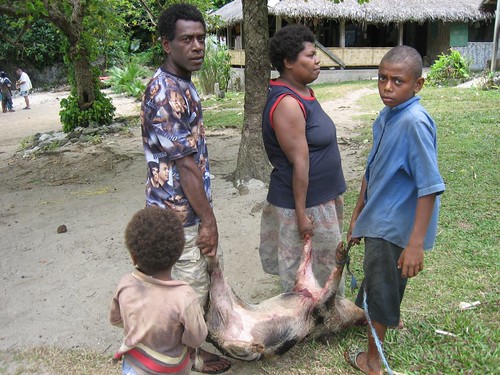
Yesterday there was a wedding in Loltong to which we were invited. Two important families from two different “tribes”, one from Loltong and one from the east coast of Pentecost Island, were joined. The festivities began even before we arrived and are still on-going. People came from villages all over north Pentecost. The bride received a very large pile of goods from the groom’s family, including a large sack of rice, clothing, bedding, a TV, and boxes filled with stuff. The groom received 13 pigs and 40,000 vatu in cash. The cash was in a sealed envelope on a post next to the largest pig — a highly desirable pig with tusks that had curved back into a complete circle.

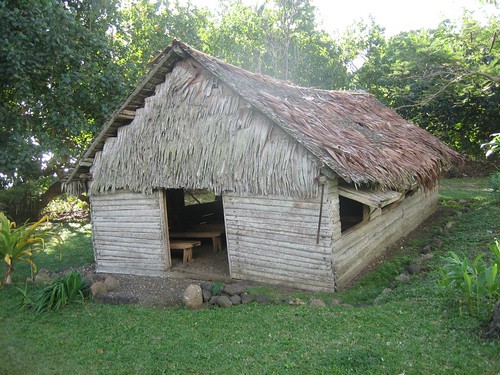
The ceremony was in the church with a male choir singing beautifully. The church is simple, lacking both pews and glass in the windows. The bride wore a simple white gown and there were bridesmaids. The groom showed no emotion, even during the receiving line when family and friends came to wish the new couple well, and slap the bride and groom with talcum powder. I took a video of the event that came out great, and took still photos of the couple outside the church. Laura and I were the only foreigners at the event.

After the ceremony, the bride disappeared and we have not seen her since. She stays out of sight with family. The festivities go on without her. In front of the nakamal (the men’s clubhouse where kava is drunk), where the pigs are tied up, the heads of both families gave speeches, as did the paramount chief (Chief William). Then the brides extended family, about 20 men and women, walk in circles around the groom, who stands next to the largest pig and the post with the cash, and a dozen specially woven pandamus mats, inspecting the goods. They make five complete circles, while the groom just looks at the ground distractedly, touching the mats and the envelope with cash. Then the mats at folded up and go to the bride’s family, and the pigs are led away for the groom’s family. Everyone is dressed simply, with the chief of the bride’s village wearing a sweater with “Polo Ralph Lauren” emblazoned in large letters across his chest.

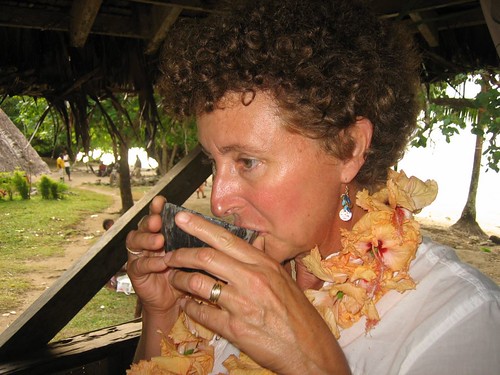
At this point, the drinking of kava, which has been going on for at least a day prior to the wedding, began in earnest — but only for the men. There is a “wedding nakamal” set up across from the regular village nakamal, with enormous quantities of freshly prepared kava, and piles of kava root yet to be prepared. It is reminiscent of an open bar at a wedding in the West. I had only one cup of kava as a way of saying “mazel tov” to the newly married couple. Men kept cycling through the nakamal to get another half-coconut shell filled with the strong, pungent kava of Pentecost Island.

It became quite dark, so Laura and I left to return to the boat. All through the night, the men continued to drink kava, and to sing and dance. Their songs were more like chants performed by a chorale, with the effect heightened by the steep cliffs above the village. We printed some wedding photos for the bride and groom on the boat, and returned to the village in the morning to leave them with family. In the morning, men were lying and sitting around the wedding nakamal, still under influence of kava, and we were surprised to see the groom sitting among them, somewhat zoned out, so we gave the photos directly to him.

We proceeded through the village to the home of Dickie and Eva, a couple we had befriended last year when we were in Loltong with Hannah. Dickie is a body builder and was an amateur and professional boxer, having traveled around the South Pacific for bouts. We brought them a big bag of gifts plus photos of them and their children that we took last year. They gave us a big load of fruit and drinking coconuts. We also met with Dickie father Jeffrey, who we also know from last year. Jeffrey’s father (Dickie’s grandfather) migrated to Espritu Santo Island in 1942 to work as a laborer for the US Navy, building the large naval facility and air base that turned into modern day Luganville. It was apparently a life changing event for the family, and the grandfather had only the highest regard to the Americans.

Dickie led us up a rather steep (for us) path along the cliff to Vulumanu College, a secondary boarding school. At the wedding, we had befriended Frazier, an extremely knowledgable and articulate teacher at the school. Frazier had worked in the Ministry of Foreign Affairs in Port Vila for some years, and accompanied the first Prime Minister (Walter Lini, from Pentecost) to the United Nations in the late 1980’s. Vulumanu College has 107 students in grades 9 through 13, who come from Pentecost and nearby islands. Vulumanu refers to the creation myth of Pentecost. Vulumanu was a giant bird (dragon) that lived on the precipice at the far north of the island and ate every person who dared to live on Pentecost Island. Finally, a woman arrived and bore two childen who slew Vulumanu, enabling the island to be populated. Something like that. We toured the school and met the principal, Reginald, who urged our return so that I could talk to the students about economics. On the way back down to Loltong, Dickie suddenly stopped and asked me if he could ask a question. He asked: Are there are still dragons alive in the world?

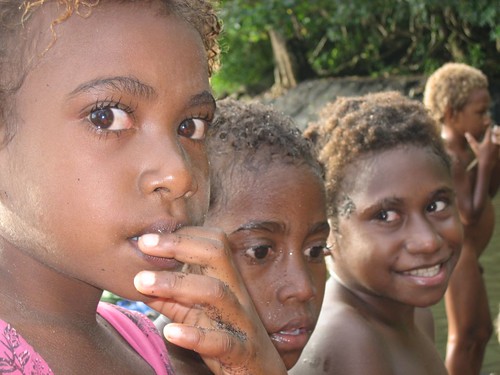
We were pretty tired when we returned to the boat in the afternoon, and had no further plans for the day. As we lay resting in the forward berth, we heard the squeals and laughter of small children. We had become friends with the little children who play under the banyan tree on the beach, giving them all lollipops and letting them help push our dinghy in the water. Perhaps this was their laughter? But our boat was anchored at least 1/4 mile from the beach — too far to hear children. I stuck my head out of the companionway to see if there was a boat nearby and saw nothing, and went back below. Then we heard more laughter, and much to our surprise, a gaggle of eight small children were treading water against our hull. They were the beach children, who swam out for a visit all by themselves. The youngest were six years old and naked, the oldest wore underpants and were no more than 11. They were shivering and tired. We put our boat ladder in the water and had them come aboard to rest, warm up, and eat cookies. When it was time to leave they just jumped off the back of the boat and started dog paddling to shore. We worried about the little ones, so we followed in the dinghy. I guess we should not have worried – we have seen six year old children walking around with machetes bigger than they.

We made one last trip to shore at sunset. Men were sprawled around the wedding nakamal, enjoyed their kava high. Us two gringos have quickly become familiar sights in Loltong, and we got only small friendly waves from the men — the groom still among them.

M.
Posted via email from sabbatical3blog’s posterous

Passage to Loltong

July 15, 2010

We left Port Sandwich at 6 am and arrived in Loltong Bay, Pentecost Island just after 3 pm local time yesterday. The first half of the passage was slow as we had a very strong adverse current as soon as we left Port Sandwich. We were consistently losing at least 1 1/2 knots to current and could barely do 5 1/2 to 6 knots. At that speed, we would not be able to make Loltong before it became too dark to find the entrance though the reef. I looked for other possible destinations

Posted via email from sabbatical3blog’s posterous

Leaving Port Sandwich

July 13, 2010

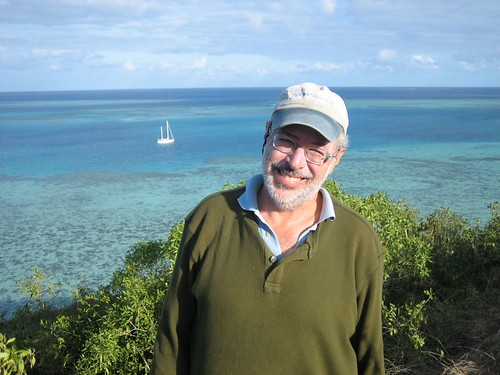
We are still in Port Sandwich on Malekula Island. It has been so comfortable here that we could not bring ourselves to leave. We have worked on my boat projects, some academic work, and some reading. We have not left the boat, nor seen another vessel. We did see a few people in the distance in the one pickup truck that goes in each direction once a day. You could say it has been quiet.

Tomorrow morning we will sail to Loltong on Pentecost Island. It is a 60 nautical mile passage. The winds should be moderately strong and on the beam, with seas to match. Should be a fast sail. We will leave at first light (5:45 am) so we have plenty of daylight to navigate through the reef into Loltong.

M.
Posted via email from sabbatical3blog’s posterous

Update from Vanuatu – July 12, 2010

Our last night in Lamen Bay was kind of rough – the winds started switching to the southwest and we knew that would mean that we would start getting a swell in the anchorage. It was so nice there, however, that we decided to take a chance and stay one final night – and hope that the swell would not get too bad. It did get bad however and the boat swayed and rocked all night long – real uncomfortable night – it alternated from feeling like we were in a washing machine to just being swung back and forth on a pendulum. We were glad to pick up anchor and head out first thing in the morning. We had been incredibly lucky to have almost 4 full days in Lamen Bay without the infamous Lamen Bay roll – but now that we have felt it we can say that it certainly is a bear.

It also turns out that there are tiny jellyfish in the crystal clear water that we were enjoying so much- and they must have been stinging me while I was watching the dugong (finally got the spelling right). I spent the whole night enduring the roll and trying not to scratch the itchy welts. Normally I swim with a full wet-suit, but I hadn’t put it on for my last swim and that was a big mistake.

We forgot to mention that on clear nights you can see the red glow from three large volcanoes in the distance – one is on Lopevi Island (12 miles away) and the two others are both on Ambrym island (about 20 miles away).

We left Lamen Bay yesterday morning and sailed 35 nautical miles northwest to the island of Malekula. It was much windier and the seas were rougher than predicted and we had a very fast sail. About an hour out Mark caught another mahi-mahi – this one was about twice as heavy as the first one – and we will be feasting on that for a while. He has had such good luck with fishing this year – combination of increased skill, good luck and the right lures.

We are now in Port Sandwich, on the island of Malekula which is a very protected anchorage – considered the safest in all of Vanuatu (safe from wind and seas that is). The wind can howl from any direction at all and you are nice and calm and protected here. To get here you have to head six miles up a little fjord like river (with the unfortunate name “Murder River”). Unfortunately it is not so safe in other respects such as you can’t swim here as it is famous for having had a fatal shark attack here some years ago. It is hard to know exactly when or how this attack happened as each person who tells the story has a little different twist to it, but no matter what the details are… we are staying out of the water.

L.

Posted via email from sabbatical3blog’s posterous

Big birthday in Epi

Today was my 57th birthday – it’s really fun to have your birthday in strange, exotic places. Here are some of the highlights of my day: up early to go to the local market, bought fresh young coconuts to cool off with (drinking the lovely cool coconut water inside), bought a big pile of bananas and yams (and that was about the extent of what was available at the market), visited with Winnie – an old Vanuatan widow that has befriended us here, hopped off the boat into the crystal clear and calm waters of the bay and found our friend the dugang right away. He let us swim over him until we got tired of it – what an amazing creature that is – try to find a Youtube video of one if you can. Swam with three gigantic sea turtles. Made friends with 4 young people who are doing some volunteer work here in a nearby village, but who had come out to swim with the dugang. Towed them to shore from a rope on our dinghy because they had tired themselves out from swimming so hard. Later on dug out 2 frozen ice-cream bars that have managed to survive in our freezer until now (don’t worry Fran and John we are saving a few for you as well). Got a birthday call from my mommy and several birthday e-mails from other family and friends.
No cake, but who needs cake when you have a dugang around?
L.

Posted via email from sabbatical3blog’s posterous

Showtime in Lamen Bay

July 9, 2010

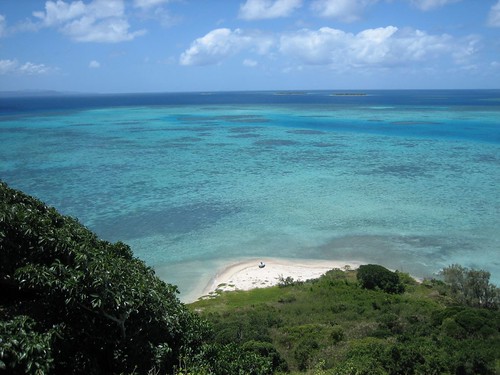
We have been in Lamen Bay, Epi Island for more than two days and have a most entertaining time. The greastest source of entertainment has come from the marine life. This afternoon, for example, we sat on the aft deck of Sabbatical III watching three large sea turtles diving nearby, predatory fish leaping into the school of small fry that hide under the boat, a dozen dolphins putting on a show of synchronized swimming, and one large, slow moving dugong coming up for air every four minutes as he dined on the sea grass 30 meters away. All we did is point and exclaim to each other as each animal in turn did its tricks seemingly for our benefit. The dugong, a cousin of the manatee, got so close to the boat late in the afternoon, I jumped in the water to get a better view. He is an odd looking creature who looks as if he weighs 1000 pounds, and who seemingly vacuums up the sea floor, while four remora fish hang on to his flanks with their suckers. He sticks his huge, fleshy face into the soft sand and sea grass and slowly moves forward sucking in the bits that he likes, leaving a cloud of grass, sea critters, and sand beind for small fish to pick through. He seemed totally unpertubed that I was swimming over him in 5 meters of water, but I made sure that I was not in his way when he surfaced for air.

Perhaps the most surprising display of animal life came yesterday as we were returning by dinghy from Lamen Island which lies about two miles away from where Sabbatical III is anchored. Two schools of small dolphins merged around us, numbering perhaps 25 to 30, and started to play with the moving dinghy in the same way that dolphins have played with Sabbatical III on numerous occasions. The effect is so much more dramatic in the dinghy where we are inches over the water and the dolphins are zig-zaging in pairs and triads just a foot off the bow of our little craft. Every so often, one would leap clear out of the water, which was always followed by one or two more doing the same thing. We just motored around Lamen Bay for 30 minutes watching them and taking some video with our little digital camera. We finally got too much sun and went back to the boat, leaving the dolphins to continue on without us.

Every two weeks there is a market day in the village, and that day is tomorrow. We will go in early and get Laura some birthday bananas, yams, and peanuts, the later being Epi Island’s most famous product. Lamen Bay, which is known for its sea life, is also known for its rolly anchorage. Except for a few hours the first night, we have been very lucky as the boat has been comfortable. The wind and swell will start to come up on Sunday, so we will likely leave for Pentecost Island with a stopover in Malekula Island.

M.
Posted via email from sabbatical3blog’s posterous

Emae Island to Epi Island

July 7, 2010

Our night anchored behind Emae Island, the night of July 5/6, started off with a clear sky full of stars and very mild conditions, but changed into squalls after midnight. We heard the anchor chain groaning in the gusts of wind and expected the squalls to pass by morning. They did not. We were glad that we had not spent another night at Cook Reef, where squalls would be unsettling and the morning rain would have made extricating ourselves from the reef much more difficult.

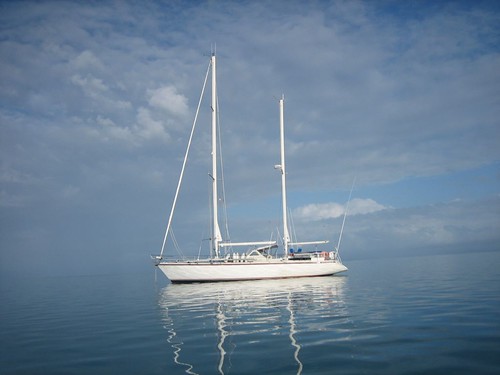
Not knowing how long the squalls and rain would last, after some discussion, we decided to leave for Epi Island as planned. Aside from the occasional rain and the larger seas, it was not too bad a sail. The winds were stronger and were more from the south, so we had a fast downwind sail. With the large swells, we decided that Revelieu Bay would be a better choice than Lamen Bay as the latter has a reputation as being rolly even in calm conditions. We were in Revelieu Bay last year and it was quite pleasant. It was not so yesterday. The swell had no problem breaking over the reef and into the anchorage. It was not comfortable.

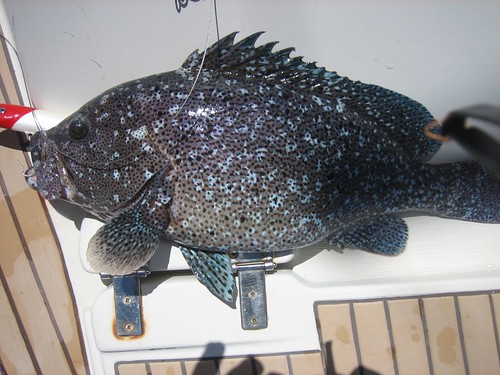
Just after leaving Emae Island, I put the first of my two fishing lines into the water. Before I could get the second line in the water, the first line was hit hard by a fish. The shock absorber on the line stretched way out and then snapped back and line started to come off the spool. We saw a fish leap and struggle in the distance behind the boat, but in the dreary conditions and large swells, we could not see what it was. I was able to cleat the hand-line spool (yo-yo) to the stern cleat before the spool would have been lost, and then let the fish tire itself out for a good 15 minutes before pulling it in. (Hey, I am not a sports fisherman. I fish for food.) It was a nice gold and green mahi-mahi (dorado), about 3 feet (1 meter) long — not that large for a mahi. It was a chore to cut fillets from the flanks of the fish in the pitching seas. I am not that nifty with a fish knife, and tried to be very careful. Laura also had a chore cooking the fish up in the rolly anchorage at Revelieu, but the fish was delicious. It was delicious again today, and will likely be as good tomorrow.

This morning the weather had settled down considerably so we made the 9 mile sail to Lamen Bay. We are the only boat here. We saw the dugong, but not from up close, and plenty of turtles. We kayaked around the bay and had a long swim. Tomorrow we will try to swim with the dugong, plus take the dinghy over to nearby Lamen Island. Epi Island is famous for its peanut, so will will try to buy some peanut stalks.

Well it is almost 7 pm. Time to check and weather and think about going to bed.

M.
Posted via email from sabbatical3blog’s posterous

Cook Reef

July 5, 2010

We are now anchored at Emae Island after having spent a day and one-half at Cook Reef. Cook Reef is a partial atoll covering quite a few square miles. Only a couple of coral rocks are visible at low tide, and nothing at high tide. Our digital cruising guide claims that there is a small notch in the northeast corner of Cook Reef that can be a place to anchor but only in perfect conditions and only during the day, and fails to provide a waypoint for the notch. We arrived in near perfect conditions and, with Laura sitting up on our downwind pole installed on the mast, we could not find the “notch” in an hour or trying. As we werre giving up and heading away, we saw a narrow gap in the reef and wound our way in very slowly until we entered a sandy basin with 8 meters of water that was just big enough for one boat to anchor.
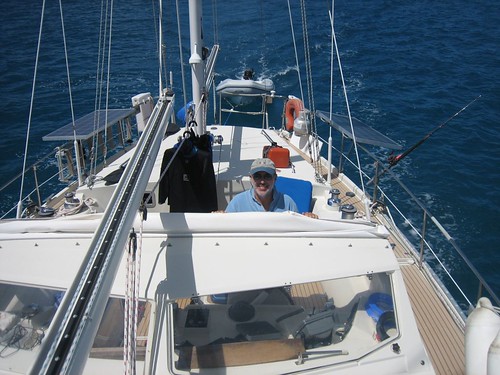
The snorkeling was great. The water was extremely clear in the basin and reef around the boat. We saw sting rays, a turtle, grouper, and large vibrant mounds of coral. The weather was so settled, we decided to stay the night. The boat hardly moved in the flat seas and calm winds. This morning we took our kayak out to another part of the lagoon where the water was only 2 to 4 meters deep and there were many smaller tropical fish. Early in the afternoon, with the sun high overhead, we threaded out way out and sailed the five miles to Emae Island in 10 – 12 knots of wind. Tomorrow we will head up to Lamen Bay on Epi Island to visit the dugongs that live there. Dugongs are very much like manatees.

It is good to be exploring in the islands rather than waiting on weather in Port Vila or Noumea. The stars are shining brightly tonight, and we are going to go out and have a look from the deck.

M.

Posted via email from sabbatical3blog’s posterous

Nguna Island

We left Port Vila this morning and sailed to Nguna Island, which lies north of Efate. Nguna Island is dominated by a huge volcano and is quite pretty. We had dolphins visit us on the passage north.

The plan is to try to enter Cook Reef, 25 miles to the north of here, and spend a couple of hours snorkeling. If the seas are too large, we will head for either Emae Island or Lamen Bay on Epi Island.

M.

Posted via email from sabbatical3blog’s posterous

Rainy Port Vila

June 27th, 2010

We have been having really awful weather here in Port Vila. It’s Sunday now and I think it started raining on Thursday. Up until today is was mostly a constant drizzle, with occasional clearings followed by a quick downpour, but today it poured so hard we felt like we were lucky to be on a boat – since it felt like a biblical downpour – and Noah’s Arc would be the only safe place to be. We managed to get off the boat and over to a new friends’s boat (Shilling of Hamble- an English boat ) at about 2:30 to play dominos (a Mexican version of the game which was a lot of fun) and it poured so hard we couldn’t even think about leaving til almost 7:00. Our dinghy was filled 1/3 of the way up with water when we left – must have been at least 4 inches of rain during that time. It is not just the rain that is keeping us in Port Vila however – it is really that we are waiting for the right winds and seas to head up to the islands. We won’t be doing any real long sails while we are here – most will be somewhere between 4 and 10 hours between islands – but it can still be very tough if you don’t get the winds and seas to go the way you are going. Hopefully things will start to clear up soon. We are counting on having good weather for our guests (Fran and John) in early August – but sure would like to have some decent weather before that as well. Our friends who went up the coast of Australia this year and towards Indonesia are also having tough times – I guess it is just a difficult weather year in the South Pacific. P.S. It is pouring again.

L.

Posted via email from sabbatical3blog’s posterous

Spending the night in Port Boise

June 19, 2010

We had an uneventful 6 hour sail to Port Boise, just outside Passe de Havannah. I was nice to be out in the sun and having the boat going again. This is a very pretty and protected anchorage.

We will leave here late in the morning (June 20)when the currents are favorable in the Passe. We expect to arrive in Port Vila, Vanuatu mid-morning on Tuesday, June 22 (local time).

M.

Posted via email from sabbatical3blog’s posterous

Leaving Noumea

June 18, 2010

We will leave Noumea tomorrow morning (Saturday, June 19) and start our passage to Vanuatu. We will either spend tomorrow night anchored out in Port Boise or Ile Ouen in the New Caledonia lagoon and head out of Passe de Havannah into the open ocean on Sunday morning, or just keep going tomorrow without a stop. We will see what the morning weather forecast brings. It is about 36 miles to Port Boise, and then 300 miles from there to Port Vila, Vanuatu, our destination.

Today is our 32nd wedding anniversary and we spent it in grand style. In the morning we went to Immigration, then Customs, and then the Port Captain, to do our check-out. Because it was still morning, the Port Captain was more sober than usual. We then proceeded to the Casino Johnston supermarket to get some last minutes things. We went to our favorite restaurant, Au Petite Café, for lunch and it was great as usual. In the afternoon, we took Sabbatical III to the fuel dock for 300 liters of duty-free diesel. Laura discovered bugs had infested our dried noodle cache, so we threw out much of our favorite Indonesian “Mie Goreng” packages and applied a healthy dose of Raid to the cabinet. At sunset, we sat at Au Bout de Monde, the bar/restaurant at the marina, and had our complimentary drinks. Now that a week of awful weather seems to be over, boats are leaving for other destinations. The Oyster 56 (“Duet II”) on one side of us left this afternoon for New Zealand, having come to New Caledonia only to avoid the payment of New Zealand tax. The Oyster 66 (“Miss Molly” from Newport, Rhode Island) on the other side of us is leaving Saturday morning for Australia with only crew aboard. We never expected to get to Vanuatu so late in the season, but the weather has been unusually bad in the southwest Pacific this winter, and we have responded accordingly. Our passage forecast looks good, with winds a bit light on Saturday (which is why we may anchor out in the lagoon Saturday night), and a bit strong on Monday night (which is one reason we may leave Saturday). At least the rain has ended, and there is the promise of some sun tomorrow. We will post our progress on this blog.

M.

Posted via email from sabbatical3blog’s posterous

Still in New Caledonia

We have been in New Caledonia for a bit over a week now, still at the dock in Noumea. Our engine repair is done – hopefully that won’t happen again and we are just waiting for the right weather conditions to head up to Vanuatu – a two day (and two night) sail from here. The weather has been cloudy and cool the past few days, but the limiting factor is the marine forecast which predicts strong winds (35 knots!) and big seas between here and Vanuatu for the next few days. We think we should be able to depart on Friday once the winds blow themselves out and the seas calm a bit.

We are meeting some new sailors– but most people are not heading up to Vanuatu right now. Lots of French boats on the dock, but also several from Australia and New Zealand. Also one from Nova Scotia, one from Sweden, one from Switzerland. The New Caledonians apparently like Americans because of the positive impact they had here during WWII. There is a memorial across the street from the marina with a tribute to the U.S.A. Coincidentally, the memorial is just across the street from a McDonalds which seems somewhat fitting. The city here is a mix of races and cultures – elegant, slim, well dressed white French people driving fancy cars, or walking their little dogs, young men with dreadlocks and Bob Marley t-shirts smoking marijuana and just hanging out, chubby Kanaks (the indigenous population of dark skinned Melanesians) with the women all wearing loose, cotton Mother Hubbard dresses, and tourists wearing shorts and gaudy shirts. Then, of course there are the sailors, most of them middle-aged or older – wearing worn cotton shirts and shorts and grubby sandals. The city is kind of decrepit, with some old French style architecture built 100 years ago, but never well maintained. There is a fancy part of town with a lovely boardwalk and lots of very chic restaurants that also has lovely beaches and is filled with windsurfers and walkers. Right near the marina is a terrific fruit and vegetable and seafood market which makes shopping quite easy.

So, we are just basically hanging out – Mark is working on his research and I have lots to read and plenty to do, but we are feeling anxious to get up to Vanuatu which is much more exotic and interesting.

L.

Some new photos from Brisbane and New Caledonia

Here are a few photos from Brisbane, which we visited the day before we left Australia, plus a few of our trip to New Caledonia:

[slickr-flickr tag=”brisbane2010″ id=”48817769@N00″ captions=”off”]

[slickr-flickr tag=”tug, newcal2010″ id=”48817769@N00″ captions=”off”]

M.

An excellent passage until…

We had an excellent passage from Scarborough to Noumea, New Caledonia… except for the last few miles. Sailing between two low pressure systems, we had winds from the west and southwest almost until the very end. The large and deep low pressure system that came up the east coast of Australia after we departed, passed off to the east well south of us, as forecast. It generated swells that were spaced far enough apart that the motion on the boat was fairly comfortable even though they were reported to be 8 – 10 feet by the end of the passage. As always, we did not have our sea legs the first couple of days and consequently did not have much of an appetite or sleep too well at first, but we adapted. After leaving the Australian coast we only encountered two other vessels. The large P&O cruise ship “Pacific Dawn” which seemed to have every light on — I could see it 10 miles away — as it made it way from Brisbane to the islands, plus a small fishing vessel 100 miles out of New Caledonia.
We were on track to enter the lagoon of New Caledonia at 1000 local time Tuesday (June the 8th) through the Passe de Dumbea which lies 12 miles to the south-southwest of Noumea. The New Caledonia lagoon is the worlds second largest coral reef lagoon. At 0530, Laura was on watch with the sails up and the motor running at low rpm in order to keep our speed up. Suddenly, the “engine overheating” alarm sounded and the engine shut down. Laura woke me up and I checked in the engine room. Engine coolant had been sprayed everywhere and the coolant reservoir was empty. The thick metal plate bolted to the Yanmar engine, to which a support brackets for our large alternator is welded, had completely fractured. The bracket itself was fine but the sudden fracture made the V-belt jump from the pulley and shreds of it were scattered about. I could not tell in the dark why all of our coolant was gone, but the fractured plate on the engine suggested that if I refilled the coolant it would simply spray out. We continued on sailing at a respectable 5.5 knots. An hour away from the Passe de Dumbea, I called Radio Noumea, the official body that monitors emergency/hailing radio traffic on VHF channel 16, to report our situation. The man who answered did not comprehend English. He just thought I was a foreign vessel reporting that I was entering New Caledonia waters. Port Moselle, the marina in Noumea, uses a low power VHF station that could not be reached from 12 miles away, so I called them up on the satellite phone and talked with the Port Captain, who speaks excellent English. He had a private towing/salvage company call me on channel 68. This company, Societe Nationale de Sauvetage en Mer, told me that they could tow me in if necessary but that it would cost over $1000. Alternatively, the Port Captain said that if I could get Sabbatical III to the entrance to Noumea harbor (Petite Rade), he could bring me into the marina with his little work boat. We were still making 5 knots under sail, and after checking the angles, found that we would not have to tack the boat for the entire 12 miles through the fairway to Noumea. We even had room to spare in case the wind shifted somewhat to the east. Perfect. So I told the tow company we would not be needing their services. My only concern is that as we approached the high island, the land mass would affect the wind adversely.

We continued to sail and even when we were about one mile from the entrance to Passe de Dumbea, sailing into the lagoon still looked like a go. Plus it would be slack tide, so there was no reason to expect adverse current. We were lined up with the channel markers but as we got closer, the wind started to die and move east. Six hundred meters from the pass our boat speed had fallen to less than 2 knots and there was a current outside the reef moving us to the northwest. We cannot tack Sabbatical III in two knots of wind and a tack free sail now seemed out of the question. I called Societe Nationale de Sauvetage en Mer and asked for a tow. They said that they were leave to get us in a few minutes.

It was a good thing that I called them. The wind died further and we were barely making way. As we waited for the tow boat, we drifted to the northwest very slowly but closer to the reef. It is unpleasant to be basically adrift so close to a reef. I used the bowthruster to tack the boat over and we moved slowly away at one knot. We could see the swells turning into rollers crashing on the reef. It took an hour for the tow boat to show up. Perhaps they had to have their lunch first? They could not get too close to us because of the swell. They threw us a monkey’s fist with a guide rope, and we brought aboard a bridled tow line that we put on the forward cleats. The tow started very slowly because of the shock load that resulted from the two boats falling and rising on different swells. Once through the pass an into the lagoon, the water was like glass and they towed us at 6.5 knots. We went by a sailboat with full sail up that seemed to be not moving at all in the nearly complete absence of wind. The Port Captain’s workboat met us once we were through Petite Rade and into Noumea harbor, and pushed us into a marina berth. The cost: $1400 for the tow company and $140 for the Port Captain. Ouch!

This is the second time that I have had a problem with this alternator mount. Originally, the mounting bracket was bolted to the engine using two of the four bolts that attach the engine plate to the engine block. After arriving in Australia in November 2008, I found that one of the bolts had sheared but the alternator bracket still held and there was no loss of functionality. The Yanmar guy at Scarborough suggested welding the bracket to the plate, which I had MRE in Scarborough do. I also replaced two engine mounts in the hope of reducing vibration. Perhaps welding the bracket to the plate was not such a good idea even though MRE fabricated a very hefty piece of metal work. Yesterday, Dominique Bossard of DB Marine in Noumea came to look at it and said that he has seen alternator mounts fail regularly for large alternators. On Sabbatical III, this is a very large alternator indeed. It is a Leece-Neville rated at 175 amps at 24 volts — I have
never seen larger on a boat this size. It was optional equipment on our boat, was factory installed, and charges the house battery bank. It is in addition to the standard 55 amp (12 volt) Yanmar alternator that charges the start battery. Monsieur Bossard had a dim view of large alternators, claiming that no matter how hefty the bracket, engine vibration would shake the alternator mounts apart within a few years. He has taken the broken plate and bracket to a metal shop for them to work up a replacement. The loss of coolant came from the fan belt ripping into the hose that carried coolant to the hot water tank. I did not even notice that it had been ripped open. We will reroute this hose away from the fan belt to reduce the risk of coolant loss if this happens again.

In retrospect, our decision 10 days ago to change our destination to Noumea from Tanna Island, Vanuatu worked out well. We opted for Noumea since it is a shorter passage and so increased the chance that we could find a weather window to leave Australia. Had we been on a passage to Tanna Island, we would not have had access to the metal fabrication facilities we need to effect a repair and would have had to continue on to Port Vila in less favorable weather and without access to our engine for few hundred miles. As it turns out, the volcano on Tanna Island has been acting up so much in the past two weeks that the island has been declared off-limits to boats and there is talk of evacuating some villages. This is the same volcano we went to the top of two years ago — the photos and video are on our web site photo page.

We hope to have our alternator mount problem solved tomorrow (Friday) or early next week, and then look for a weather window to Port Vila. M.

Posted via email from sabbatical3blog’s posterous

Still in Australia

An hour before our Customs checkout and departure from Australia, we decided to remain in port. The new grib files showed a low pressure cell developing just to the south of New Caledonia, at the boundary of the SPCZ (South Pacific Convergence Zone). We had been aware of this possibility for the past two days, but the gribs did not show any development until this morning at 8 am. This system was now predicted to generate 35 knot winds and 11-13 foot seas in a long, narrow band that blocks our approach to New Caledonia. So I call Chris at Australian Customs and got him just before he left Brisbane for the drive to Scarborough to check us out.The next few days do not look good for leaving, so we will be here for a while longer.

M.

Posted via email from sabbatical3blog’s posterous

Departing for New Caledonia

We are leaving for Noumea, New Caledonia at 10:00 am local time Monday, May 31 (which is 0000 UTC). The forecast is pretty good. We should start with west winds in the 10-20 knot range for the first two days, then a period of light and variable winds as we pass through the center of a high, ending with southeasterlies in the last day and one-half. Seas should be 5 – 8 feet. Our course will likely be well south of the rhumb line in order to deal with the wind shift. The passage should take about 5 1/2 days and cover 880 nautical miles.

M.

Posted via email from sabbatical3blog’s posterous

Still in Australia waiting on weather

We had planned to leave this morning for New Caledonia but yesterday the weather forecast turned a bit ugly and we decided to stay in port.  We had returned our rental car,  bought our rotisserie chickens, and booked a time with Australia Customs.  Now we are left with a lot of pre-cooked chicken. What has seems like a small blemish on the weather chart quickly blew up into a low pressure cell now predicted to generate wind up to 40 knots and 9 – 13 foot waves.  We will wait a few days for this small system and a larger low pressure system behind it to pass off to the east.  Things should settle down by Friday or more likely Saturday.

Below are some more signs from Australia:

[slickr-flickr tag=”sign2010″ id=”48817769@N00″ captions=”off” descriptions=”on”]

M.

Australia May 15th, 2010

So what the heck have we been doing for almost two weeks in Australia?  Well, here are just a few of the big items. We put up our mainsail and jib, installed a new VHF radio and speakers, installed a new water pump, installed a new exhaust riser on the engine, put new gaskets on all the external lockers, installed a new thermostat and switch in the fridge, upgraded our dinghy anchor rode, upgraded our satellite phone software, shlepped  jerry cans of  diesel fuel to the boat (extra fuel besides the 600 liters in the fuel tank),  cleaned out the sail lockers and the huge cockpit locker, cleaned out all cabinets and shopped for and put away a ton of drinks and groceries.   We also had some lovely morning and afternoon walks by the seaside – listening to the incredible bird calls- and did a bit of socializing with the few boats we know here.

Today , Sunday, we decided to take ½ day off and went to a couple of Redcliffe events.  Redcliffe is the community we are in – about an hour north of Brisbane.  We have been working on the boat practically non-stop for 12 days, and although we don’t really get tired of working on the boat – and there is still a lot to do –  we really needed a break.  The first event we went to was supposed to be a big flea market with used boat and fishing gear. It was sponsored by the local coast guard and was just down the street from the marina at a local Catholic school.  It was quite a funny little event, with 6 or 7 tables of the most run down items you can imagine. Short pieces of discarded hoses and wires, rotting and rusty bolts and screws, boat lines that looked frayed and worn,  life jackets that must have been made in the 1950’s, some old beat up fishing poles.   We knew a couple of people there and even brought our old VHF radio parts with us to sell via a nice lady we knew there who said she would sell it for us. (It did not sell).  It was hard to spend more than  15 minutes there so that was a very quick stop.  We then proceeded to the next highlight of the Redcliffe week-end which was the kite flying exhibition down by the water.    There were dozens of huge kites being flown –  including a half naked mermaid, a lobster, a couple of frogs,  a squid, a whale, a shark and some other cute kites – but the greatest part of the event was watching  the official kite flyers who were all older looking  men with huge beards, even  huger bellies, and the general look of carnival workers.    The park was filled with families and there were at least 100 food tents set up – with a lot more attention being paid to the food than to the kites.  If you think Americans eat poorly, you have to experience the Australian outlook on food – fried doughnuts, fried potatoes, candy-floss, fried chicken, candy, more candy, thick and gooey pastry, pizza, and every other possible combination of fried, sugary and otherwise not so good for you food.  It was a little bit like the Minnesota State Fair, only all concentrated into a 2 block area.    We know that the bigger cities of Australia have all sorts of lovely restaurants and cultural events, but we are not quite in the same league here.   Still, it was a lot of fun to get out and walk around with the Aussies.   Some of the stands were selling handicrafts and various kinds of goodies and our favorite was the guy selling a special tool for making fishing lures which promised to “Take the pricks out of fishing”.

Mark has a list of 80 things to take care of on the boat before we go – and my list is shorter , but still a bit exhausting. 

Provisioning is almost done  – just to give you some idea of volume here are just a few of the things we have:

·         18 boxes of Special K and a few other cereals

·         20 boxes of various mueslis

·         40 liters of UHT milk

·         28 chocolate bars (embarrassing, but true)

·         20 cans of various beans and chickpeas

·         20 cans of mushrooms

·         20 jars of curry paste

·         40 cans of tuna, sardines and mackerel

·         30 packages of Ramen

Tomorrow we will try to finish up the provisioning – and tuck it all away into whatever space is left on the boat. It is kind of amazing how much stuff you can put in here.  Now the problem will just be with me remembering where the heck I put all that chocolate!

L.

Posted via email from sabbatical3blog’s posterous

Back in Australia

We have been back in Australia for 12 days now, getting Sabbatical III ready to go to sea again.  We have been working hard on repairs, provisioning, and organizing. It is great to be back on the boat.   Here are some photos from the area from around Scarborough Marina in Redcliffe, Queensland.

Mark and Laura

(click on thumbnail to see larger photo)

[slickr-flickr tag=”australia, May, 2010″ id=”48817769@N00″ captions=”off”]

Vera’s visit the Sabbatical III’s in New England

Michael and Britta visit us from April 1 through April 10, 2010

(click on thumbnail to see larger photo)

Photos from Providence:

[slickr-flickr tag=”vera2010, providence” id=”48817769@N00″ captions=”off”]

Photos from Bristol:

[slickr-flickr tag=”vera2010, bristol” id=”48817769@N00″ captions=”off”]

Photos from Newport (International Yacht Restoration Society):

[slickr-flickr tag=”vera2010, newport, iyrs” id=”48817769@N00″ captions=”off”]

Photos from Newport (walks outside):

[slickr-flickr tag=”vera2010, newportout” id=”48817769@N00″ captions=”off”]

Photos from Martha’s Vineyard (Menemsha):

[slickr-flickr tag=”vera2010, vineyard, menemsha” id=”48817769@N00″ captions=”off”]

Photos from Martha’s Vineyard (house and beach in Chilmark):

[slickr-flickr tag=”vera2010, vineyard, kramers” id=”48817769@N00″ captions=”off”]

New photos from the Vineyard that we just discovered on our camera:

[slickr-flickr tag=”veranew” id=”48817769@N00″ captions=”off”]

Animated sailing passages on Sabbatical III

We are back in Providence — getting used to snow and cold — enjoying being close to family and friends.

I have added a new feature to the web site.  Thanks to the overhead photography of Google Earth, you can now retake all of the passages undertaken by Sabbatical III in the past year without getting wet or seasick.  Here is the link:

https://sabbatical3.net/earth/index.html

Let me know what you think.

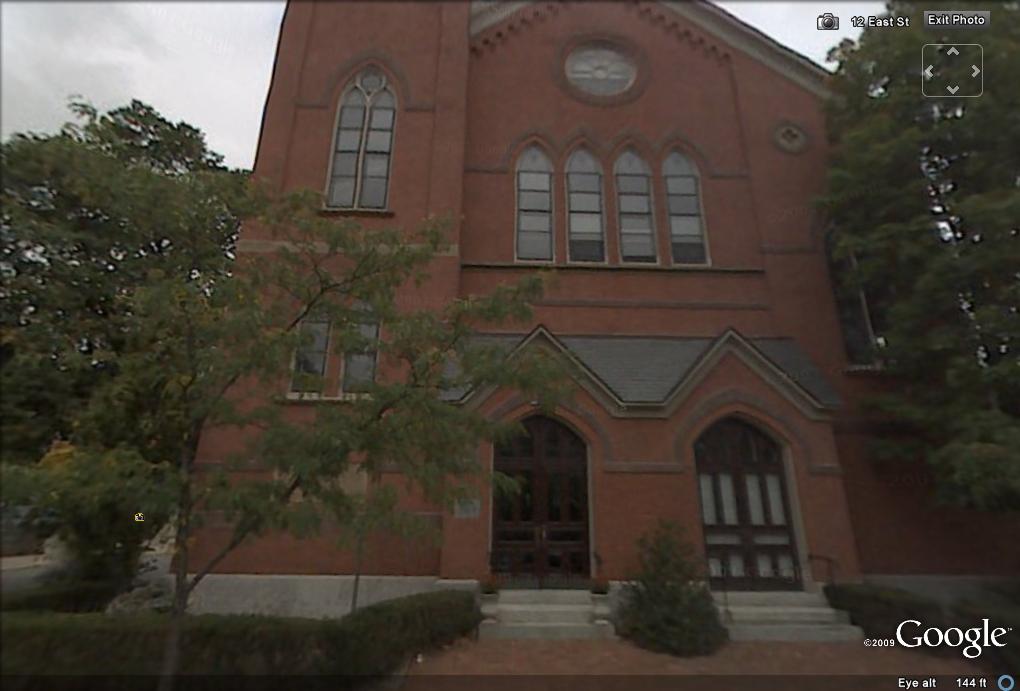
We are living in the former Union Baptist Church, now condominiums.  Here is a Google Earth street view of the building.  Our bedroom window is the flower petal window at the top.

Our bedroom has the floral window

Mark

Scenes and Signs from Australia

These are some scenes and signs from the last 10 days in Scarborough, Australia. We have spent most of the past 10 days getting Sabbatical III ready to get hauled next Thursday (Nov 19). There is a myriad of things to do (the list has 165 items), some of which are easy and take only a few minutes, and some of which are complicated. For exmaple, the problem with the feed pump to the watermaker was solved once I took some things apart and found an obstruction. The problem with the exhaust riser for the Yanmar diesel requires a new one which costs half as much in the US as in Australia, so we will just bring one back with us in May and replace it then.

It has become hot in the past few days. The midday sun brings up a sea breeze that exceeds 20 knots in the afternoon. We have taken advantage of the free electric BBQs scattered in the parkland along the shore to have  quick, convenient, and cool BBQ suppers.

M.

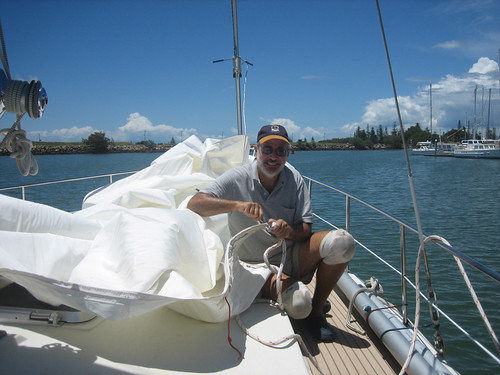
Putting the genoa away
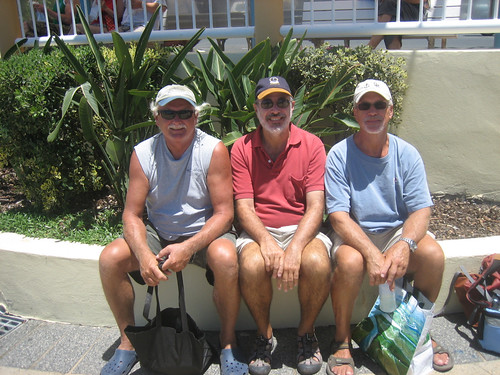
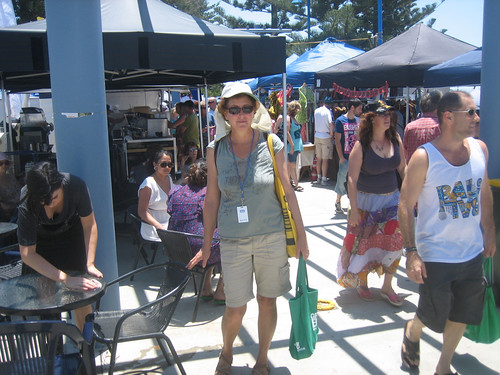
Left to right:  Jim of Cardea, Mark, Jim's crew Jim, at the farmers market, Redcliffe
Left to right: Jim of Cardea, Mark, Jims crew Jim, at the farmers market, Redcliffe
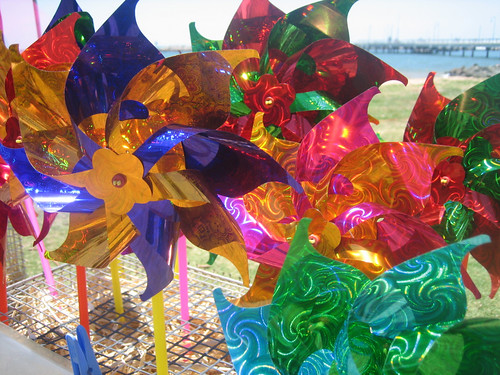
Pinwheels, Redcliffe
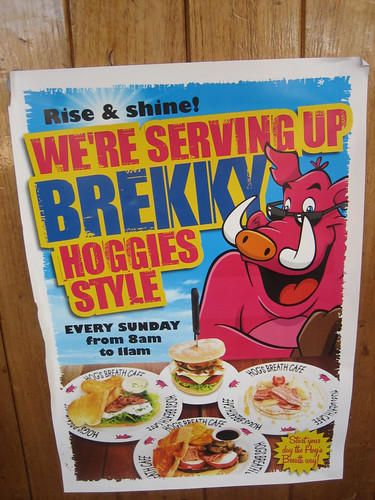
Ad for the Hogs Breath Cafe, Scarborough
Laura at the farmers market
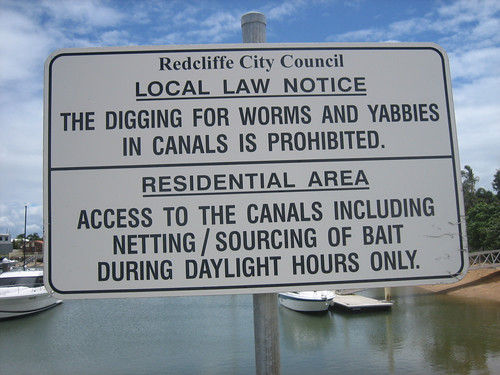
No digging for yabbies in Recliffe
No digging for yabbies in Redcliffe
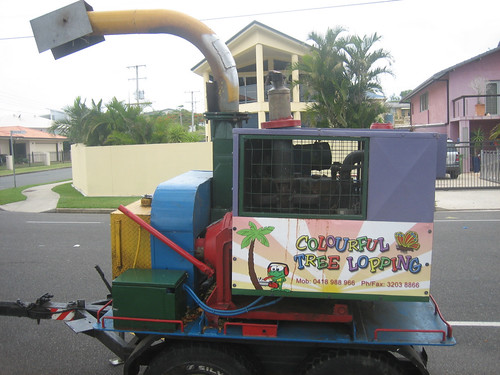
Ad for tree lopping: Scarborough
Loo with a View: Mooloolaba
Memorial to Steve Irwin -- The Crocodile Hunter

Mooloolaba

Here are some pictures from Brisbane and Mooloolaba. Australia is great – lots of sunshine, nice people and endless beaches. Also abundant restaurants and coffee shops. Lots of seafood – especially in Mooloolaba. Some amazingly fit people as well as a whole lot of overweight people. Looks a lot like the U.S. in that respect. Way too much good food around.

How did it get to be November already? We spent 8 days enjoying Brisbane – lots of great walks in that town. Now we have been in Mooloolaba for 4 days. We came up here to see our friends Intiaq.
They left New Caledonia a week after we did and we have not seen them since, although we have been in contact by e-mail. We knew they were planning to come to Mooloolaba at some point to leave their boat and fly home to Switzerland for a few months. We did not know, however, exactly when they would arrive in Mooloolaba. We decided to sail up and hopefully rendezvous with them for a few days. It turned out to be a great plan as we sailed into the here within 1/2 an hour of each other just by coincidence. It was a very nice reunion as they are always the most hospitable people. Karin immediately prepared us one of her beautiful gourmet meals and we have spent a fair bit off time with them. They are quite busy, however, getting ready for their departure which is going to be this Friday (tomorrow).

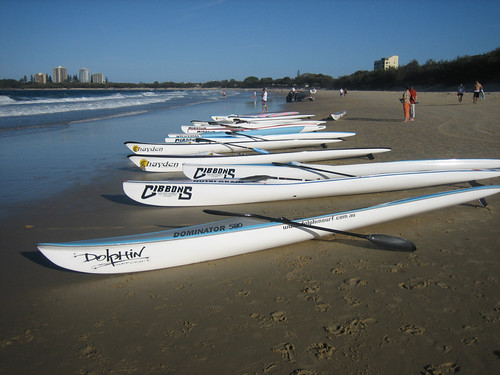
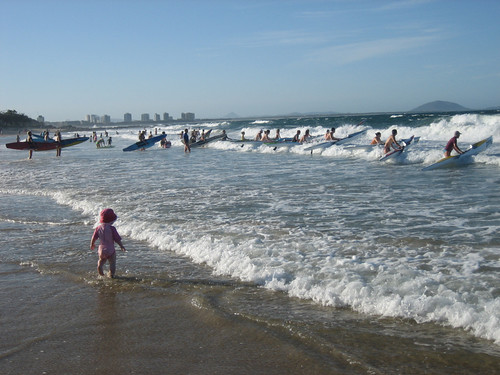
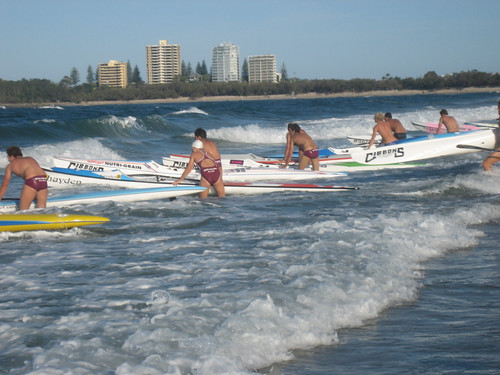
Mooloolaba is a great little place with a beautiful beach and lots of restaurants and a great boardwalk. Yesterday the beach was filled with dozens of iron-men and women – all doing the most extreme exercise at the beach. Whole groups of incredibly fit men and women were doing a routine where they would first run into the raging surf and swim to a buoy and back, then run around a marked off section of the beach, then grab their surf-board and paddle out to an even farther buoy and ride the waves back, then run around the poles on the beach again, and finally grab a sea kayak and paddle like crazy out to an even farther buoy. After seeing one round of this Mark and I were sure they would all collapse on the beach, but they just rested for about 60 seconds and then set off and did the whole thing over and over again. I have never seen such extreme physical fitness. Boy did we feel fat and old! We plan to leave here today and sail the boat down to Scarborough – at the marina where Sabbatical III will spend the season.

L.

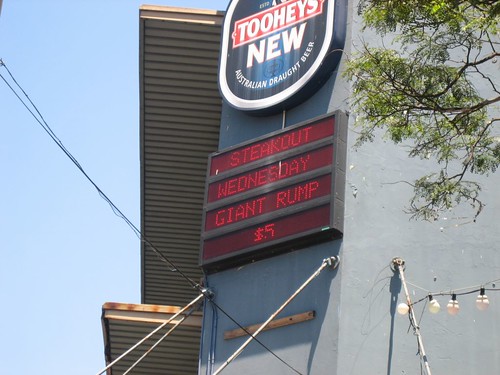
A mouthwatering restaurant sign in Brisbane - rump anyone?
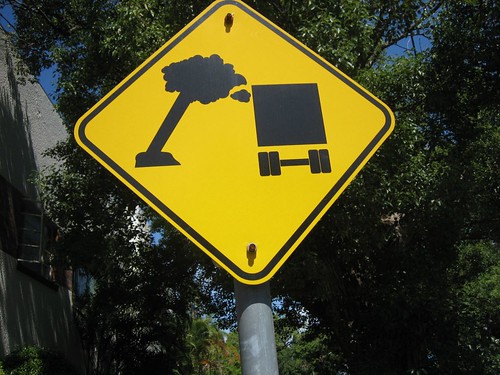
Can you figure out this street sign?
Dockside Marina in Brisbane
Exhausted tourist waiting for the ferry
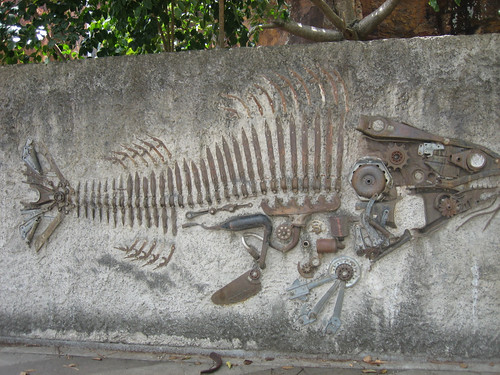
Riverside sculpture in Brisbane
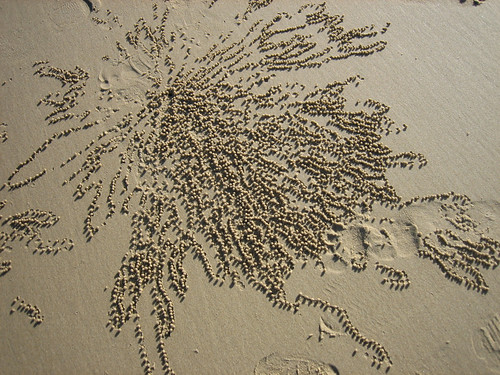
Design in the sand from crabs on the beach in Mooloolaba
Racing kayaks on the beach at Mooloolaba
A kayaker club prepares to launch into the surf
The kayakers paddle out over the surf
The iron men and women prepare to launch their kayaks for one of multiple=
The iron men and women prepare to launch their kayaks for one of multiple excursions through the surf
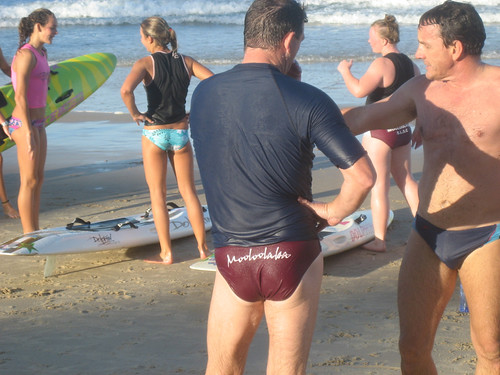
Check out the coaches butt to see where they are
Laura watches the action on the beach
Mark on the beach at Mooloolaba
Two of the phenomonally fit people on the beach at Mooloolaba

Update from the Coral Sea

We are three days and a few hours out of New Caledonia. The winds have been excellent, although a bit too strong at times. The seas were large and confused during days 2 and 3, making it a bit uncomfortable. The seas are well down now and should remain that way.

We made such good time during the past 3 days, that we have reduced sail in an effort to slow down so that we do not get to the entrance of Moreton Bay before sunrise on Thursday. We have some current pushing us along so it is hard to slow the boat down. We have no main up, and reefs in the small jib and mizzen and we are still doing 7 knots.

Our current position is

South 25 degrees 24.85 minutes
East 157 degrees 20.62 minutes

at 0300 UTC, 20 October.

Laura moderates an SSB net with six other boats (Priscilla, Harmonie, Memphis, Wombat of Sydney, Morning Light, and Marnie). All of these boats left Noumea within a few hours of Sabbatical III and all, save Wombat, are headed to Brisbane. An hour ago Harmonie appeared in the distance off of our starboard quarter. She is an Amel Super Maramu identical to Sabbatical III.

We should be at the Rivergate Marina in Brisbane by noon Thursday, local time.

M.

Posted via email from sabbatical3blog’s posterous

Leaving in an hour

We will leave Port Moselle in Noumea, Nw Caledonia for Brisbane in one hour (at 9 am local time).  The weather forecast is excellent. So good that other boats that planned to leave later, altered their plans because of the forecast. The Port Captain told me that Sabbatical III was the 28th boat to check-out so far that day, and wondered where everyone was going.

We filled up with duty-free diesel, baguettes, and “passage food.” We got out long underwear out of storage and checked out all boat systems. We will send updates enroute.

M.

Posted via email from sabbatical3blog’s posterous

Moving along

These are the last photos that we will post from New Caledonia. Things have moved along quickly and Saturday morning we begin the 812 nautical mile passage to Brisbane, Australia. We arrived back in Noumea yesterday (Wednesday) and quickly learned that a weather window to Australia was open this weekend. Last year we spent three weeks waiting for a window and this year we will not wait at all since Saturday is the earliest that we can leave. The weather forecast is too good to pass up.

The passage will take us about five days — we hope to arrive at slack tide in Brisbane around noon on Thursday, October 22. We will post updates along the way.

M.

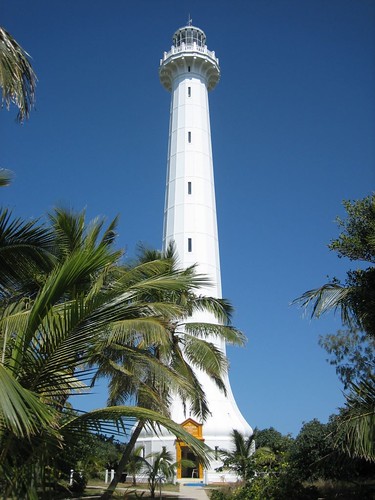
Phare Amadee:  Ilot Amadee Lighthouse, built in the 1860s
Phare Amadee: Ilot Amadee Lighthouse, built in the 1860s
Phare Amadee:  Ilot Amadee Lighthouse, built in the 1860s
Phare Amadee: Ilot Amadee Lighthouse, built in the 1860s
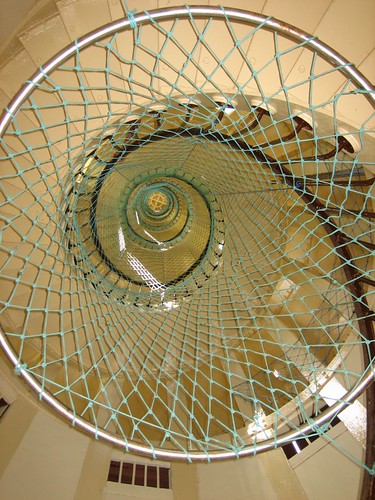
Phare Amadee: spiral staircase to light
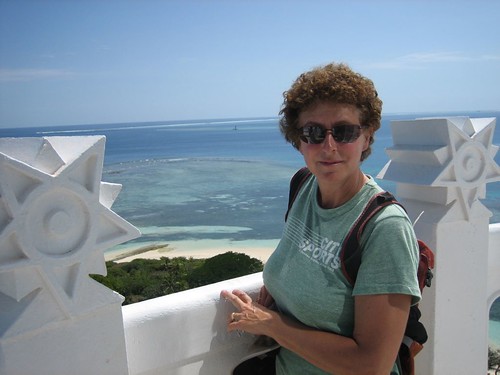
Phare Amadee: Laura at the to
Phare Amadee: Laura at the top
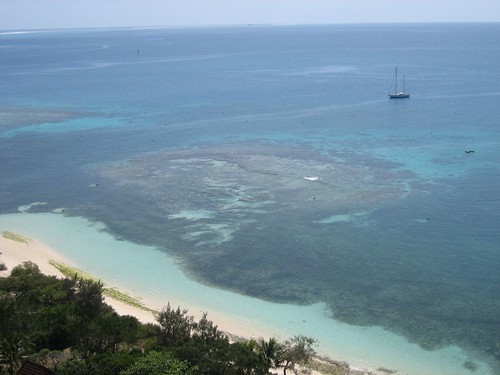
Phare Amadee:  Sabbatical III at anchor behind the reef at Amadee
Phare Amadee: Sabbatical III at anchor behind the reef at Amadee
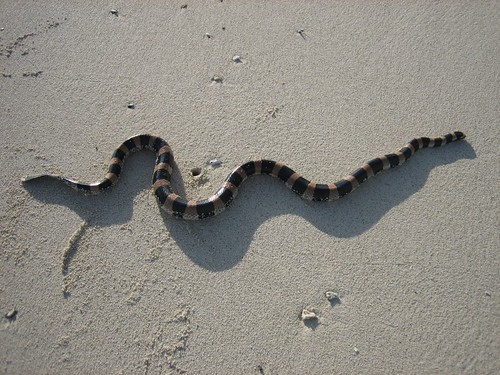
Ilot Mato: sea snake on the beach
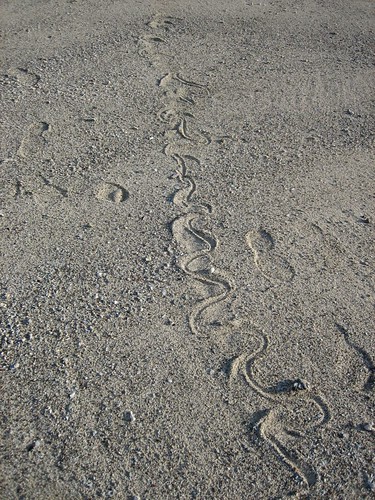
Ilot Mato: sea snake track on the beach
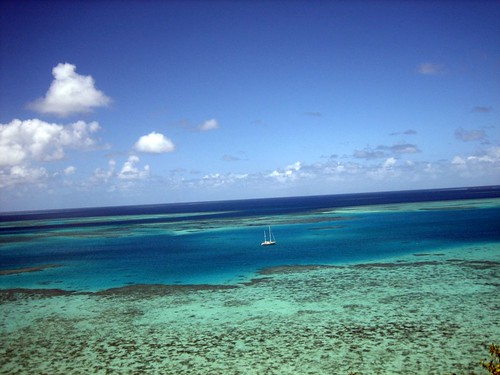
Ilot Mato: view from the top
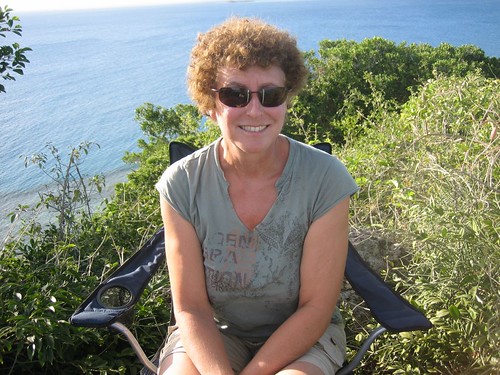
Ilot Mato: Laura enjoys the view from the top in a collapsible chair
Ilot Mato: view from the top with Mark
Ilot Mato: dinghy on the beach
Ilot Mato: at anchor
Underway
Underway
Southern lagoon: Beautiful grouper caught and released
Noumea:  stepping ashore in Port Moselle
Noumea: stepping ashore in Port Moselle

Snakes, sharks, and tsunami’s

We are still anchored off Ilot Mato, which we mistakenly called Ilot Mata in our last blog entry. We took this photo just an hour ago. We decided to brave the venomous sea snakes and land on the island once again. There is a steep hill that ascends right from the shore from which we expected a beautiful view of the southern lagoon of New Caledonia. To our surprise, we did not see any snakes on the beach this time, except for one large dead snake that looked like someone had bitten it’s head off. With shoes and socks to protect our feet and ankles from rocks and snakes, instead of flip-flops, we headed up the rocky hill to the summit and found wonderful views in all directions.

The water was so clear, that even from the top Laura spotted a big group of large fish swimming in the shallow water right next to our dinghy. As we descended part way down the hill, she declared the fish to be sharks, an idea that I immediately dismissed. The water was too shallow and the group of fish was too numerous to be sharks. Laura vision is keener that mine — they were sharks. At least a dozen blacktipped sharks cruising just behind the dinghy, which was parked in the only bit of beach on Ilot Mato. They were not too big – ranging from 3 – 5 feet – but big enough that walking into the water to launch the dinghy seemed unwise. Blacktipped sharks do not go after humans, but we still not wish to venture into a shark convention uninvited. The presence of the sharks may explain the absence of sea snakes, and the dead one on the beach. I would rather swim with a blacktipped shark than a creepy seasnake, so bon appetit sharks!

After a few minutes, we realized that the sharks were not leaving anytime soon. We threw some rocks into the water but that did not seem to scare the sharks away. Finally, we decided it would be best to push the dinghy into the water from the edge of the beach and then leap in. Laura did a perfect dive from the beach into the dinghy and seeing the dinghy float away, I dove as well, grabbing onto to a tube. When we started the outboard motor, the sharks moved back a few feet but did not leave the area. They are persistent.

After Intiaq left us three days ago, we had two days of storms followed by a day of high winds and sunshine. There were a number of wind shifts, typically from NE to SW and then back, which set off the anchor alarm (GPS-based proximity alarm) and kept us a little bit on the alert. Sabbatical III is anchored in a relatively narrow pass between two long coral reefs situated to the east of the small, uninhabited Ilot Mato. If we drag anchor here, we will be hard up on a reef very quickly. The photograph shows it well.

There was also another tsunami alert which we missed altogether. An earthquake in Vanuatu prompted the alert that led officials here in New Caledonia to sound horns and send text messages to cell phones. We have a New Caledonia cell phone but we did not get a text message, and we are too far from civilization to hear a horn. Schools were evacuated along the east coast of Grande Terre and on the nearby Loyalty Islands. We were blissfully unaware and there is little that we could have done had we heard the alert. It would have taken us too long to get our anchor up and move into open water given the shortness of the warning. Our friends on Intiaq heard the warning at Ilot Amadee and were able to head out into open water. (As it turned out, the tsunami wave was only 1 foot tall, and was not felt.) We first heard about the tsunami in an email from my sister Fran. So, if you hear of some danger coming our way, please let us know.

M.

Posted via email from sabbatical3blog’s posterous

Sea snakes galore!

October 7th

We sailed down to Ile Mata (S 22 33.2, E 166 47.7) yesterday to meet up with our friends on Intiaq. They have guests on board – Karin’s brother Gert and sister-in-law Lulu from France – and they have been sailing around to various anchorages since we last saw them a few weeks ago. At first glance, the tiny little island of Mata, with beautiful turquoise and green water inside a nice protected anchorage surrounded by reefs, seemed absolutely perfect. It turns out to have one very unattractive quality however .. an overabundance of sea snakes both on land and in the water.

After a wonderful lunch onboard Intiaq yesterday afternoon, we dinghied over to shore to check out the little beach when we noticed one big fat snake wriggling its way up from the water across the beach. It was about 6 feet long and a good three inches in circumference Then five minutes later we saw two more snakes sunning themselves in the rocks by the beach, and then another smaller snake joining his big friend on the beach. After seeing yet another in the water, we decided it was time to hop quickly back into the dinghy and get back to the boat where there are, at least to our knowledge, no snakes at all. It would not be too bad if the snakes were not venomous, but they are. At least they are not aggressive. We have seen quite a few snakes here this year, but nothing like on little Ile Mata.

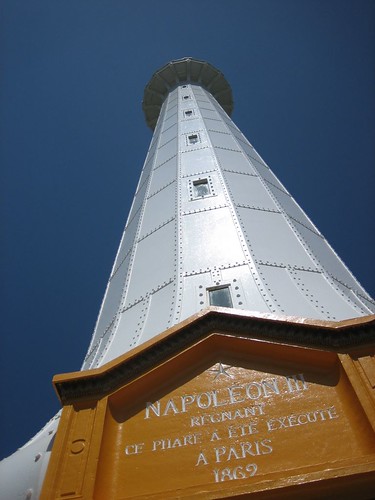
Before coming here we spent a night on Ile Amadee. Amadee is well known here for its magnificent 56 meter high lighthouse built in Paris in 1862, taken apart and shipped here to be reassembled on the island. Amadee is also a huge tourist destination because of the beautiful water and great snorkeling. We normally don’t like to go to places with lots of tourists, but decided to sail over to have a look. We were really lucky to have gone on a Monday, because it turns out that none of the tour boats run on Monday and we had the whole place to ourselves. The only other person there was a young man who acts as a watchman for the place. He opened the door to the magnificent lighthouse and let us climb up to the top. From there we had an incredible view of the island, the surrounding reefs, and the hills and mountains of Grande Terre.

The snorkeling at Ilot Amadee was unlike anything we have seen to date. The whole lagoon is teeming with fish, who are apparently very smart and have learned that this is the place to be if you want to be fed. There is a glass bottom boat that runs several times a day every day of the week (except Mondays luckily) and they feed the fish from it. So when we were snorkeling all the fish came over to see if we had any hand-outs. There was just an amazing number of beautiful fish of all shapes and sizes and fantastic colors. It felt a little artificial, and we don’t really like the idea of fish being trained to receive food from humans, but I have to admit it was a pretty overwhelming visual experience. I couldn’t help but keep humming the tune “Under the Sea” from the Little Mermaid the whole time I was in the water. It looked like a scene that could only be choreographed by Disney.

Last week-end was spent back in the dock at Noumea, cleaning the boat, re-provisioning the boat (yes, more food for us!) and visiting with other cruisers on the dock. We met the most interesting Japanese single-handed sailor. He has a tiny boat that goes very slowly and he is just wandering around the world while his wife and daughter continue living in Japan. His last trip was 50 days at sea! That is 2.5 times longer than our longest sail to date. I really can not imagine it. His English was very minimal, but we managed to have a 2 hour conversation with him over beers on our boat. I am not sure we totally understood each other, but we did enjoy it very much.

Just to fill in the gaps in our blog (for our own record) we also stopped in a few places after leaving Ilot Puen. Puen is the island where we met Donny, the island caretaker who gave us sea-shells and venison. We had stayed in Puen all week-end enjoying the calm anchorage and the beautiful hiking. On Monday, the 28th of September we returned to Tenia for a few nights . Tenia is not a good place to be on a week-end as it draws many power-boats from the nearby mainland. By Monday it is empty again. The weather was fine, but there was a big swell in the anchorage which made it a little rocky on the boat and somewhat difficult to snorkel.

One day we went out but found it was too rough to get in the water near the reef drop-off (where the bigger, more interesting fish hang out) so we swam in the shallower parts of the reef. It was not bad, but there were a few large snakes there so we did not stay long. The next day conditions were better for snorkeling so we returned to the deeper water drop-off and found the same wonderful spot to snorkel that we had been in a few days earlier with huge grouper and other fish all around. We always drop the dinghy anchor in shallow water in a clear, sandy spot and then hop off it to snorkel. I always let Mark get off first to be sure the coast is clear. This time he hopped off and announced that there was a large shark lying on the sand just under the boat. I kind of thought he was kidding but found it was true. It was a large zebra shark (not dangerous) and he seemed to be sleeping as he did not move when we got into the water and he was still there when we returned from our swim 45 minutes later.

On September 20th we left Tenia and sailed to Ile Ronhua, a tiny little uninhabited island on the way back to Noumea. It was on the way to Ronhua that we heard the warning about the tsunami. There was just a single announcement on the VHF radio, and in very poor English. It was enough, however, to get our attention. Fortunately nothing and no one in New Caledonia was affected by the tsunami.

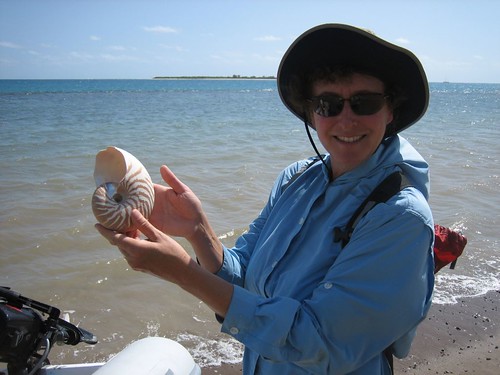
Ile Ronhua is really tiny – it takes about 8 minutes to walk around it, but it has a fairly extensive reef around it which makes it a decent anchorage for prevailing southeast winds. Just across from Ronhua is the western side of the much larger island of Hugon. We dinghied over there (about ½ mile) and right away found a beautiful (although slightly cracked) Nautilus shell. We ended up finding a few more there as well, but somehow managed to totally zone out and leave the best one on the beach. Maybe it will be there next year if we return?

We had just one more stop on the way back to Noumea — the very lovely and protected anchorage of Maa.

Today is the first day in weeks that we have not had sunshine and clear skies. It is grey, cool and stormy, but the anchorage is very comfortable. Intiaq left and once again it is just Sabbatical III alone at anchor. We look forward to catching up with friends next week when boats start congregating in Noumea for their trips to Australia and New Zealand. Over the next few weeks most cruisers will leave New Caledonia for one of those two destinations and we will be among them.

L.

Posted via email from sabbatical3blog’s posterous

New photos from New Caledonia

Here are a few pictures which we hope capture some of the beauty of New Caledonia. We spent two weeks island hopping – well, actually – sand spit hopping, as some of the islands we stopped at weren’t more than a large sand spit. Beautiful clear water, white sand beaches, sunshine and blue skies. Our friends Karin and Jean-Francois, of the catamaran Intiaq, were with us for some of the time and we hope to meet up with them again soon. We are in Noumea, the capitol city, but will be heading out tomorrow for some more island hopping.

L. and M.

Jean-Francois and Karin of Intiaq at Ile Ouen
Laura, Jean-Francois and Karin at Ile Ouen
Mark at Ilot Mbe Kouen
Self-portrait: Ilot Mbe Kouen
Beach at Ilot Mbe Kouen
Beach at Ilot Tenia
Beach at Ilot Tenia
Sabbatical III at anchor off of Ile Puen
Mangroves on the shore of Ile Puen
Dinghy (foreground) and Sabbatical III (background) at Ile Puen
Hiking in the hills of Ile Puen
Ile Puen
Ile Puen
Laura with nautilus shell, Ile Hugon
Sea snake on the beach at Ile Tenia

Ilot Tenia, Ile Puen, and a bit of Australia

27 September

We are about to spend our third night anchored on the north side of Ile Puen.  Before talking about this place, let me get up to date with our other stops.

On Tuesday, September 22 we left Ilot Kouen for Ilot Tenia, about 25 miles further up the west coast of New Caledonia. Ilot Tenia differs from other small islands in the lagoon in that it is right up against the fringing reef that encircles New Caledonia. Like Ilot Kouen, it is uninhabited but busy on weekends when French-Calendonians take to their boats.

On arrival, there was only one other sailboat at anchor — “Robyn’s Nest” with our friends John and Chris plus Chris’ visiting friend Karen from Calgary. They had us over for drinks and chicken curry that evening and told us where to snorkel the next day. John likes Ilot Tenia because he can surf in the adjacent Passe de Saint Vincent in the morning, and kiteboard in the lee of Ilot Tenia in the afternoon when the wind rises.

On Wednesday, we headed out in our dinghy through a small gap in the reef to snorkel (in full wet suits) near where the ocean meets the fringing reef. It was quite spectacular, with many large fish including big groupers, a school of humpheads, a Spanish mackerel, and a black-tipped shark. We sat on the beach of the island for a few minutes to enjoy the sunset but were attached by a swarm of mosquitoes, the effects of which we still feel.

We planned on staying a few days at Tenia, but weird weather Thursday induced us to leave. Every day since we left Noumea, we have had nothing but blue skies, low humidity and sunshine, until Thursday morning. It was sunny and cool (68 degrees F) early in the morning, but there was a line of gray clouds, and what looked like fog or rain, in the distance. Within the hour, a cold front pushed through turning the boat around 180 degrees in a wind shift, a freshening breeze, choppy seas, but just a trace of rain. Ilot Tenia is a very unprotected anchorage, so after waiting a bit hoping that the dark clouds and “fog” would dissipate, we decided to head to Ile Puen, where there is a protected place to anchor. As we prepared the boat for the short sail to Ile Puen, we noticed that the decks were covered in red dirt. As it turns out, the “fog” was a huge dust storm that came off of the Australian outback, passed over Sydney (delaying flights), and made its way 1000 miles to New Caledonia. It was all over the news here and seems to be unprecedented.

Ile Puen is a privately owned island, and we needed to ask permission to come ashore. On landing the dinghy, we were greeted by a large extended family of French-Caledoniens (“Caldoche”) with a ramshackle weekend home. There were a dozen children, ranging in age from 1 to 18 years, running around a having a good time. We were also introduced to the “proprietor” of the island, Donnie, who lives a 100 meters away. They were all so friendly and excited to meet “les Americains.” The Caldoche, who settled in New Caledonia in the 1800’s, are quite fond of Americans. As we settled into tea and cake with them, they said how the Caldoche appreciate what the Americans did in saving them from Japanese occupation during the war, and also saving France from the Germans. Not something we expected to hear, even though we have seen the small park honoring the US just next to the Port Moselle marina in Noumea.

Donnie gave us a large rump of freshly shot deer and, after seeing the imperfect shells Laura was collecting on the beach, he have her a perfect nautilus shell — quite a rarity.

Yesterday and today we hiked around the island in brilliant sunshine. As we ate breakfast in the cockpit, dolphins frolicked nearby.

Tomorrow, we expect to sail back to Ilot Tenia and snorkel some more. Now that Robyn’s Nest has headed back to Noumea, Sabbatical III seems to be the only cruising boat around.

M.

Posted via email from sabbatical3blog’s posterous

Ilot Kouen

September 19, 2009

   We have not been keeping up with our blog as well as we hoped. So let me get things caught up briefly.

 We spend three pleasant nights in Baie Ire on Ile Ouen after our passage from Vanuatu. There was no sense in heading to Noumea quickly since it was the weekend and it seemed possible that we would be confined to the boat waiting for immigration, customs, and quarantine. Sometimes officials do not work on weekends.

 On Monday morning (14 Sep) we sailed the 25 miles to Noumea in great conditions and took the last slip available at the visitors dock at Port Moselle, the public marina of Noumea. Clearing in was quick and efficient (but all our pamplemousse and other fresh products were taken, except for ginger).

 Noumea is a modern, bustling French city of 100,000 with cars and buses whizzing along on wide boulevards, patisseries, chocolatiers, boulangeries, and branches of the largest French supermarkets. There is an amazing assortment of cheese, bread, and other treats which we sampled and added to the boat’s stores.

 We stayed at Port Moselle for four days, provisioning the boat and doing boat maintenance, plus reading internet email and catching up with academic work. We made use of the free Wifi at McDonald’s just two blocks from the marina.

 Friday morning (18 Sep) we sailed off to Ilot Kouen, about 13 miles up the west coast of Grande Terre. The “ilot” is only 100 meters long and 20 meters wide at high tide, perhaps twice that at low. The anchorage is well protected from waves by an extensive coral reef. Unfortunately, the wind has been very strong — 25 knots and more — between noon and midnight both days we have been here. We only got off the boat this morning for a swim. In the afternoons, we hide out from the wind in the cockpit and eat a leisurely lunch and read our books. It is Saturday, and six local (French-Caledonian)sailboats have anchored nearby to kite surf and spend the weekend. I imagine they will mostly be gone tomorrow — heading back to Noumea in a strong wind right on the nose.

 We intend to explore others small ilots along the west coast of Grande Terre over the next few weeks. The water is crystal clear and the coral is healthy and there are lots of fish, plus dolphins and turtles. We only hope that the wind calms a bit.

 M.

Posted via email from sabbatical3blog’s posterous

Passage to New Caledonia

September 12, 2009

 We arrived safely in New Caledonia yesterday, September 11th, after a 40 hour sail from Vanuatu. As with practically all of our long distance sailing, we paid careful attention to weather forecasts in advance, in order to have as easy a trip as possible… and as often occurs, the weather forecasts just were not right. It is very difficult to forecast weather around here , and all of the islands seem to have their own little weather systems that just can’t be predicted. Our sail from Vanuatu to New Caledonia was approximately 300 miles and pretty much in a direction due south. The weather forecast was for two full days of strong, but steady winds from the east and swells of 2 meters, diminishing as we went. A little swing of wind direction from the northeast was even predicted for the second day. This is about the best weather forecast you could ask for to sail south.

 We left Vanuatu at 4:00 p.m on Friday, heading out of Port Vila harbor with our friends Intiaq just behind us. It was absolutely gorgeous out and our first night was moon-lit with moderate seas and good winds from the east. By Saturday morning the skies had completely clouded up and the seas got rougher. By noon the winds started coming more out of the south than the east, which made our progress south more difficult. A large squall blew up and for a couple of hours we had torrential rain and rough seas and winds blowing at more than 30 knots. Not a pretty picture at all. Our friends on Intiaq were about 8 miles ahead of us by this time.

 The winds and swells continued to be much higher than predicted for the rest of the day. By about 9:00 p.m. we sailed past Lifou , one of the Loyalty Islands (part of New Caledonia). We would have liked to stop at Lifou, but since it was already dark, and all of the anchorages were on the opposite side of the island from where we were, we continued on through the 2nd night. Fortunately the seas calmed down a lot from then on, and it became more pleasant. The moon came out of the clouds and lit up the ocean like a spotlight. We had to motorsail most of the night in order to make headway, but it was not choppy or too difficult. By early morning the wind had come up from the north and we had an easy sail the rest of the way,

 By 9 am we were at Passe de Havannah, the channel that leads into the large lagoon of Grand Terre, the main island of New Caledonia. (The lagoon is enormous, with numerous large and small islands scattered throughout it. It is 350 miles at its longest and 35 miles across!) At Passe de Havannah you can have current,wind and waves going against you if you time it wrong- and it can be almost unpassable, with a huge steep chop. We had worked hard, however, to keep up our speed on the passage in order to time our arrival so that we would have the current flowing with us – and with the wind now at our back, our pass through the canal could not have been smoother. We arrived at the same time as Intiaq, who with their 47 foot catamaran, sail faster than us, but who had slowed down to time their arrival for maximum ease of entry. Together we headed to Baie du Prony to drop anchor and rest up for a few days before proceeding to Noumea to check in.

 There are several different spots in Baie du Prony where you can anchor, and it turns out that none of them were suitable for us. The first one we stopped at had good protection from the wind, but the bottom was so full of broken coral that you could not dig your anchor in. When we first tried anchoring there we found that we were not holding well – the anchor just slipping along the bottom of the bay rather than digging in firmly. When we pulled up the anchor we found a HUGE piece of coral just stuck into the anchor and we could not get it off. It had gotten impaled by the anchor. Our friends helped us by hopping into their dinghy and then coming over to us with a rope and some strong hands to help pry the thing off. We retried anchoring twice more – but it was futile. We attempted another anchorage spot in the bay and found that it had good holding (sand, not coral), but it put us too close to shore to be safe.

 We all decided to move a few miles away to another anchorage where there was supposed to be lots of space, no coral, and nice, thick, clay-like bottom to dig your anchor into. Thank goodness we moved, for the anchorage we are currently in is very good. We are at Baie Ire, on the northwest corner of Ile Ouen, just off of Canal (channel) Wooden. The wind picked up and switched around to the south-southwest, and it is blowing like the dickens out there. If we had stayed in the other anchorages, with poor holding, we would most likely have dragged to shore during the night.

 We went to bed very early last night and woke up with the wind howling and the boat bouncing around a lot. One more anchorage change to the other side of the bay at 6:30 a.m., and we are finally feeling comfortable. It is nice to be here – the wind is blowing hard, but the sun is shining, and we are looking forward to eating lunch onboard Intiaq in a few hours. Phew!

 L.

Posted via email from sabbatical3blog’s posterous

New photos and new destinations

We have been in Port Vila for almost a week. We have visited with friends, old and new, and worked to get the boat ready for our next passage. We plan to leave tomorrow afternoon (Tuesday, 8 Sep) for New Caledonia. Our route takes us just east of Lifou Island in the Loyalties, and then into the lagoon of New Caledonia via the Passe Havannah. We expect to enter the pass early Thursday morning and then anchor to rest before proceeding to Noumea.

These are some photos from the past two weeks.

M.

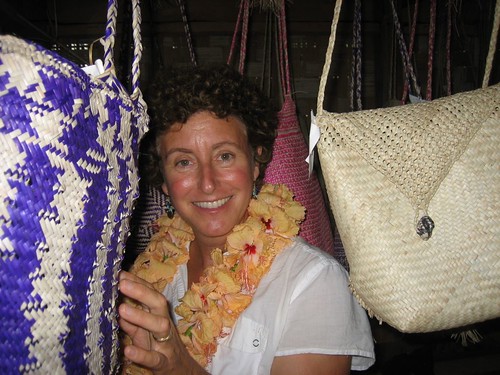
Laura checks out woven bags in Asanvari, Maewo Island
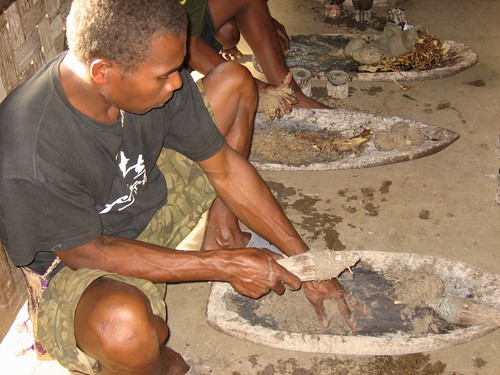
Chopping kava root, Asanvari, Maevo Island
Straining kava, Asanvari
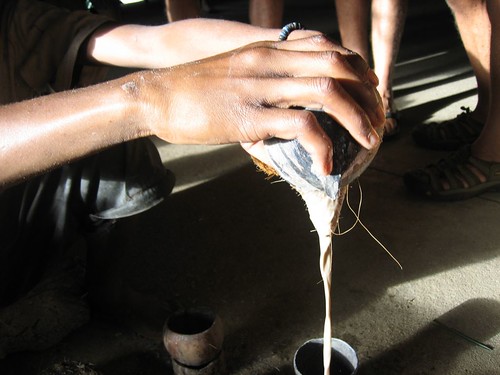
Pouring kava, Asanavari
Drinking kava, Asanvari
Waterfall, Asanvari
Waterfall, Asanvari
Freshly killed pig, Asanvari
Freshly cooked pig, Asanvari
Our hiking guide Meery, Asanvari
Meery and Violet with Laura, Asanvari
Meery and Violet climb the root of a banyan tree, Asanvari
Meery, Violet, and Mark, Asanvari
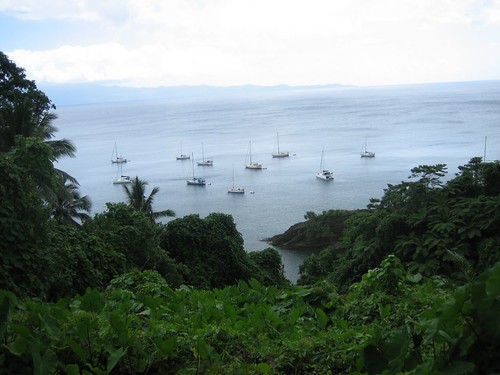
View towards the anchorage, Asanvari
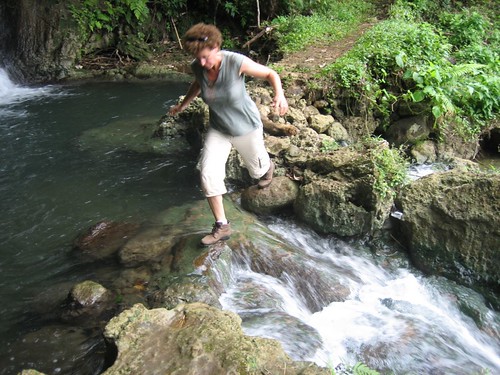
Laura navigates a stream, Asanvari
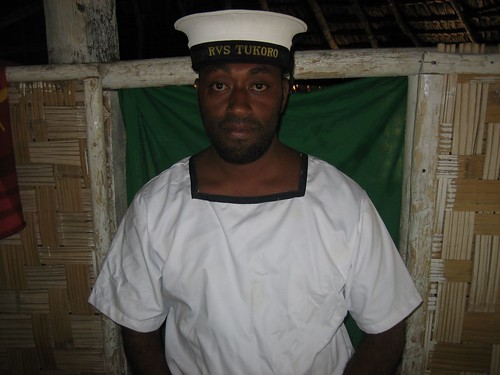
Sailor in Vanuatu Navy on leave, Asanvari
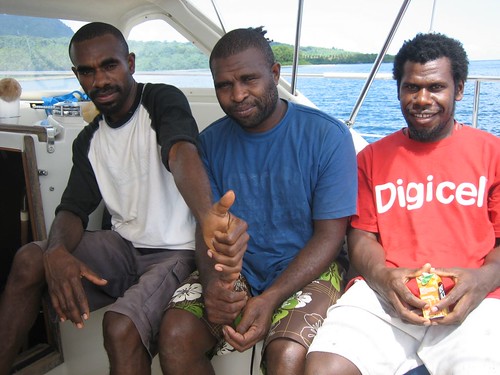
Ken, Thomas,and Tom.  Brothers from Rivelieu Bay, Epi Island
Ken, Thomas,and Tom. Brothers from Rivelieu Bay, Epi Island
Church, Rivelieu Bay, Epi Island
Port Vila mooring field (Sabbatical III is visible)

What we did in Asanvari

We had a great time in Asanvari Bay, Maewo. We arrived there on Monday, August 24, and had a fun time catching up with 3 very special boats – all people we like very much and have known for some time now. They all had to leave on Tuesday morning, but there were a dozen other boats in the anchorage that were part of the Island Cruising Association Rally of New Zealand. We got to know a lot of them over the next few days, and were included in all of the ICA rally events. There were a lot of really nice people there – a good mix of boats from the U.S., Australia and New Zealand for the most part. We know the leader of the ICA from last year, and he (John) and his wife Lynn are extremely friendly and outgoing people. They arranged for a lot of “events” between the yachties and the locals. Normally we enjoy doing this ourselves, but it was a nice change to be part of a group.

The village of Asanvari is well known among yachties because of its extroverted chief, Chief Nelson, and his very charmismatic son, Nixon. The whole village was in mourning, however, because of a terrible tragedy that had just occurred two weeks before we arrived – the death of one of Chief Nelson’s sons. It was apparently the third of his sons to have died. They say it is all due to “black magic”. It was so sad, and somewhat awkward, to be there as a tourist at such a time. Somehow, however, the village still wanted to continue with many of the planned festivities between the yachts and themselves. I think they count on this annual visit for a fair portion of their income and perhaps they could not afford to forgo it.

It sounds a bit corny, but the ICA arranged with Chief Nelson to have a little ceremony on Wednesday where each boat was officially adopted by a village family. The families came dressed in their best outfits and presented us all with gifts of fruit and weavings, and even dresses for some of the women – a consistenly unflattering dress called the “mother hubbard” that was introduced to the islands by the missionaries a hundred and fifty years ago. The yachties all brought gifts to their adopted families over the next few days and got to know each other. Our “family” consisted of a husband and wife (Maurice and Katherine) and their children – we were never sure exactly how many children they had, but we did get to know their 12 year old girl Meery, and their 25 year old son, Paul a bit. Meery and her friend Violet accompanied us on a hike up to the top of the hill overlooking their village, and over the top of the beautiful waterfall that flows down to the sea. Meery and Violet were barefoot while Mark and I trudged along, slipping on the rocks, even in our hiking boots. We sang songs to each other and had a wonderful time.

The next day there was supposed to be a dance put on by the locals – a kustom dance – with traditional costumes and very primitive instruments. The young men who usually dance were mourning the death of their friend and did not dance. Only 2 adults and 3 young boys danced – and only for a few minutes. Then they made us a feast – consisting primarily of a very large, and very well cooked pig that they had killed that day. The pig was roasted in the ground for the entire day. Mark and I had actually heard the poor guy squealing his head off just before they disposed of him earlier in the day. I am not too keen on pig – particularly large boars with their heads intact – so I just filled up mainly on rice and some vegetables that were also served. Everyone else was pretty happy about the pig meal. The village arranged for a local “string band” to play and the yachties and the village kids spent a very enjoyable evening dancing together. They offered kava to everyone as well but after trying a cup of the very potent brew the first night, most of us declined altogether on night two.

Besides the village activities, Mark and I spent a lot of time snorkeling there. The water was about the clearest we have seen in Vanuatu and had some beautiful crevasses carved out in the rock by underground springs. The boat was sitting in about 60 feet of water and you could see to the bottom as if it were just a few feet deep.

We decided to leave on Thursday evening as we have to start heading back to Port Villa – which is about 150 miles to the south – and we saw that the winds were right to make at least the first leg of the trip – as far as Epi – an island about halfway between Asanvari and Port Villa. We left at 5:00 p.m. – on an amazingly beautiful evening – and as we sailed away from the island of Maewo, where Asanvari is located, we could understand why some people consider it one of the most beautiful places in Vanuatu. We had a great sail, going past the island of Pentecost and then past Ambrym whose active volcano was clearly visible belching up lava during the night. Mark was on watch and said it was beautiful (I was down below trying to get some sleep). In the morning we sailed into our current bay – on the southern part of Epi. It is a black sand bay, but the water is crystal clear. We thought we would just stay one night, but now we are ending our second day here and will probably stay a third. It is quite lovely. Three guys from the village nearby paddled over today and asked to see our boat. We had them on-board and had an interesting time talking with them. Once again, we received fruit in exchange for clothing and other goods. We had a little train set on board which we gave them for their kids and they were thrilled.

Our big activity today was changing our sails – we had to take down the large genoa and put up our much smaller blade jib. It is not a bad job, except once you take the sail down, you have to fold it up on the deck and put it away. It is so big and so bulky that it seems impossible to do. Leon and Ricky once helped us do this when we were together in the Caribbean, so they can understand how hard it is. Somehow we managed to do it however, having a good schvitz in the mid-day sun, and now have the correct sail for heading south.

L.

Posted via email from sabbatical3blog’s posterous

Departure for Epi Island

We have a small weather window for heading south so we are leaving here (Asanvari on Maewo Island) for either Epi Island (Revelieu Bay) or Port Vila on Efate. How far we go depends on wind and how we feel.

 We will depart in less than one hour (at about 5 pm local time, Aug 28) and head south along the west coast of Pentecost and Ambrym Islands. We are expecting east winds of about 15 knots.

 M.

Posted via email from sabbatical3blog’s posterous

Surunda to Maewo

August 25, 2009

We ended up spending 4 nights in Surunda Bay. It is a pretty little bay whose main attraction for us was that it had free internet. We took great advantage of that, catching up on some work related stuff for Mark as well as enjoying seeing the NY Times and finding out what was happening in the world( after reading the news we decided it is better not to look).

Our friends Mike and Lynn from “Wombat of Sydney” were at the same anchorage and we spent a couple of nice evenings with them. Mark and I met a pleasant 14 year old local boy named Gaston who was selling soft drinks from his family’s tiny store by the village of Surunda. (The sign outside advertised ice-cream, but we were not lucky enough to find any in stock). He took us on a little walking tour of the town, including a trip to his family’s garden, where he climbed trees to pick us vegies growing from tall vines as well as an assortment of fruits. At the edge of the garden were the remains of a plane from WWII. Surunda was a U.S. airbase during the war.

On Sunday, the 23rd, we decided it was time to go and with a pretty good weather forecast we headed out to our next destination – the island of Maewo – about 60 miles to the east. We had been waiting for the winds to switch around from the prevailing SE to the south so we could get a good angle for our sail. Friends had headed out on Saturday, and instead of finding south to southeasterly winds at 10-15 knots, they found winds coming much more from the southeast and blowing at up to 32 knots. That makes for a very nasty sail. We ended up being quite lucky as we still had an upwind sail, but the winds were much lighter (about 10-12 knots) and we had a good enough angle to sail almost all the way.

The tricky part about leaving Surunda was that the anchorage was inside a protective coral reef opening up to the east. The reef had an opening that was easily wide enough for a boat to pass through safely, but without good light you could not see exactly where the reef ended and the clear water started. There were also many coral bombies sticking their nasty little heads up here and there even in the opening. To leave Surunda and get to the next island before dark you had to leave very early , but the problem was that to leave the reef you had to sail east, directly into the rising sun which blinds you from seeing the reef. In addition, at high tide the reef is totally covered with water so you can not even see breakers on it, and there was a morning high tide for the few days around when we wanted to leave.

We are very cautious with reefs (for apparent reasons), but could see no way to leave Surunda in the conditions we would optimally wait for in that situation: i.e. mid-tide, sun overhead or at our back, so the day before we planned to leave we went out in our dinghy with a portable GPS and mapped out exact locations through the pass that would be safe. We double-checked these marks against our RayMarine Chart Plotter and felt pretty secure about leaving through the pass. At 6:30 a.m. when there was enough light to see, but not too much glare in our eyes, we proceeded slowly out of the anchorage, and safely through the pass (bet you thought we were going to hit it). It was a bit hair-raising.

We ended up having a terrific sail, and Mark even landed a small, but much desired yellow-fin tuna late in the afternoon. He also caught a mahi-mahi, but it ended up snapping itself right off the hook when Mark tried to pull him into the boat. Those guys are hard to catch. We decided to spend the night at the island of Ambae which we had to pass to get to Maewo. Ambae is a huge volcanic island that you can see from Surunda Bay, and is apparently the island that was the model for James Michener’s Bali Hai. Michener was based in Surunda Bay during the war.

There were 13 boats in the anchorage just around the corner from us in Ambae- all part of a rally put on by the Island Cruising Association (ICA) that comes up from New Zealand every year – and they were all headed to the same anchorage we were going to on Maewo. We are actually members of that association, having joined a year ago so we could join them for a sail between Vanuatu and New Caledonia. We decided to get up really early so that we could get to the anchorage early and secure a good anchoring spot. It is the first time this year that we have been with so many boats. We left the anchorage at first light (about 5:45) and had a bouncy ride the 12 miles into the anchorage at Asanvari – strong wind on the nose, big seas. We were delighted to find three boats here already that we know and like very well – Intiaq (Swiss), Cardea (American) and Mondavi(Italian).

There are 3 mooring balls in the anchorage here in Asanvari, put up last year by the ICA and because we got here so early we were able to secure one . Normally we like to anchor rather than tie up to a mooring ball, but the anchorage here is very deep and filled with coral on the bottom, so we were happy to get a mooring ball. There are now about 12 boats in the anchorage. Many people consider it the most beautiful in Vanuatu. We can’t say that, but it is, indeed, beautiful, with very blue, clear water and a waterfall running down the steep cliffs and into a deep pool just behind us.

Both Cardea and Mondavi were planning on leaving first thing in the morning, so we had a small party on our boat with them last night which ended up being a lot of fun. Lorenzo (Italian) and Candia (German), the couple on Mondavi, are extremely outgoing and talkative and very funny and between them and Jim on Cardea we had a wonderful time. I made pizzas and everyone drank wine and told hysterical sailing stories. All of the bad and strange things that happen when sailing end up being terrific stories, especially when told by other sailers, whom, we have learned, all have a tendency to exaggerate!

L.

Posted via email from sabbatical3blog’s posterous

Photos from Port Orly (Espritu Santo) and the Banks

We are now in the Surunda anchorage at the southern end of Peterson Bay on Espritu Santo. We came here because it is fairly close to Luganville and we had to go to Luganville to get a visa extension and renew our “cruising permit.” That has been successfully accomplished.

We have some internet access here and so use this opportunity to post a selection of photos taken at Port Orly on Espritu Santo Island and at Gaua (Santa Maria) Island and Vanua Lava Island in the Banks group of islands.

View from the beach at Port Orly
Market House, Port Orly
We donated prescription medicine to this clinic
Our chartered pick-up with driver Chief Joseph and his grand-daughter plus our jerry cans and supplies (Oyster Island)
With Karin of Intiaq in Port Orly
Laura causes a sensation in the school yard
Catching sardines, Port Orly
Sardines,Port Orly
Sardines,Port Orly
Fisherman makes Laura a gift
Making watermusic, Lacona Bay, Gaua Island
Children watch watermusic
Chief Nixon, Waterfall Bay, Vanua Lava Island
Chief Nixons wife
Chief Nixon's wife Linda
Two of Chief Nixons children
Two of Chief Nixon's children

Lovely Port Orly

Some notes on Port Orly

 After spending two weeks here in total over the past month, Port Orly has become one of our favorite spots in Vanuatu. Here are some notes to remember for future visits:

 Snorkeling is excellent by the small island as well as in the middle of the bay behind the reef with the wreck on it. Some turtles and rays as well as beautiful coral and the normal Vanuatu tropical fish. (one shark)

 You can anchor safely in a large sandy area between Bucephale Island and Thion Island. There are numerous coral bombies, but most are low and it is easy to find a spot to anchor.

 The water is aquamarine, warm and fantastic for swimming.

 If you take the dinghy all the way across the bay to the west you will find that it leads into a river which is easily navigable by dinghy. You can also kayak once you get inside the river. Up the river about 1/2 a mile is an adorable restaurant, just being completed while we were here. If the two toothless Vanuatu grandfathers who are building it are able to pull it off, it will be a really fun destination for any future visits.

 The anchorage faces Thion Island which has a beautiful little beach that is walkable at all tides – some great shells wash up there.

 The locals sometimes fish nearby, but do not venture close to the boat.

 The village of Port Orly has one restaurant in operation, owned and run by Rosina – worth a stop, even if it does cost about $9 a person (a fortune here). No menu, they just serve you what they have that day.

 The villagers seemed unfriendly at first, but after walking through town a few times we discovered that they are actually very sweet and friendly, especially the kids. A small amount of conversation in French earns many smiles.

 Behind the school is a little cantine where you can buy local fruit and vegetables during school hours. They will even try to get you things you ask for if you order it the day before.

 There are a few tiny stores – they just have some old tinned food and fly covered bread snacks.

 There is a local health clinic which was very greatful to take all of our old medications – their supplies are almost nil and one woman does everything by herself.

 The sandbar near town is great for anchoring the dinghy, but only at high tide. At low tide it is totally inaccessible, being filled with broken hunks of coral.

 The alternative to the sandbar is a nice sandy beach about 1/2 a mile away by dinghy – towards the west – right next to a broken down jetty. The fishermen who hang out there will be happy to share their fresh sardines with you.

 Getting back to the boat from the jetty can be a bear – a chop tend to form in the open water between town and the anchorage. You have time your visits to town carefully.

 Very nice place……. pretty close to paradise in fact.

 Tomorrow, however, we have to move on…. heading a little south.
L.

Posted via email from sabbatical3blog’s posterous

Heading South: Back to Port Orly

In our last blog we wrote that Chief Nixon of Waterfall Bay had sung us a welcome song and a farewell song that he composed just for us. We thought that the farewell song was premature, but it turns out it was not. The weather turned nasty and the next day (Aug 12) we left just at sunset. Heavy rain and squalls ended at about 3 pm and the weather forecast was good for going but not staying, so we left.

 We had a better than expected sail south and arrived in Port Orly early in the morning. The hot and rainy weather that we have been experiencing for the past two weeks has been replaced with strong southeasterly tradewinds and lots of sunshine. It has cooled off and the humidity has plummeted. I am wearing a light sweatshirt as I write this, and we have light blankets at night. The chop in the bay from the winds makes the snorkelling less good. Instead, we have explored the town of Port Orly, hiked a bit, and canoed up the river at the far end of the bay. The Australian catamaran Ka Pai that we met in Tanna last year came in for a day and we had a pleasant BBQ on their boat.

 We will likely remain here only a day or two more before making our way further south. Waterfall Bay in Vanua Lava Island turns out to be the furthest that we will get this season. The remaining passages of the year all get us closer Australia.

 M.

Posted via email from sabbatical3blog’s posterous